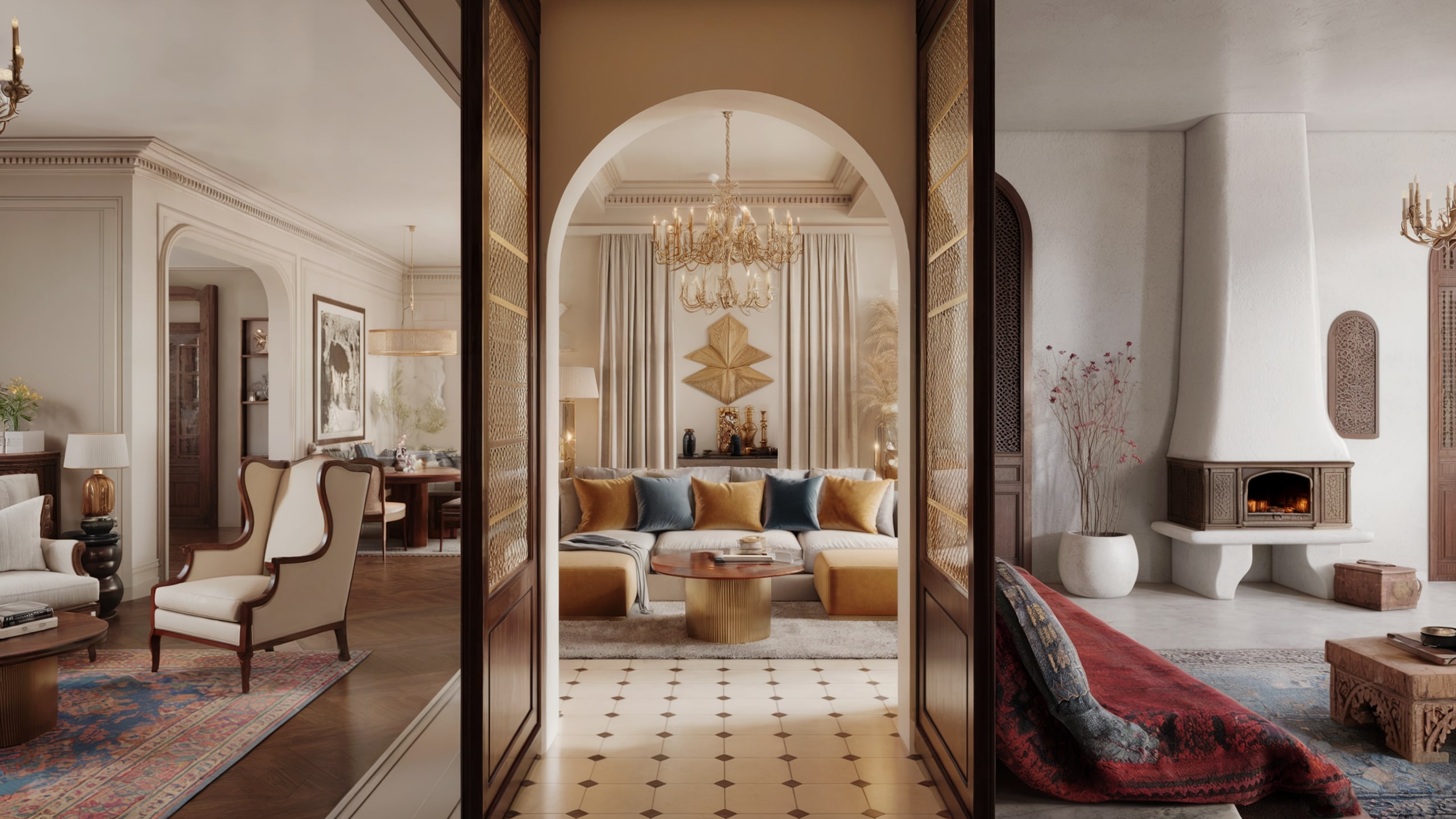
Traditional interior design has long been celebrated for its enduring charm, sense of balance, and comforting familiarity. But contrary to popular perception, there’s no single “traditional style”. What we often label as “traditional” is in fact a reflection of specific cultural histories, values, and aesthetics unique to each region or country.
From the stately homes of the United States to the regal elegance of Dubai’s interiors and the heartfelt folk-inspired aesthetics of Ukrainian homes, traditional interior design style takes on many faces. These styles are steeped in history and craftsmanship, passed down and reinterpreted across generations. In today’s globalized world, this style continues to evolve, integrating modern function with age-old elegance, creating a rich narrative through architecture, furniture, colors, and textures.
In this in-depth guide, we explore the foundations and nuances of traditional interior design across cultures, examining how each locale preserves its heritage through its interiors, and how modern homeowners can draw inspiration from these timeless design philosophies.
What Is Traditional Interior Design Style?
At its core, traditional interior design is a style rooted in history, craftsmanship, and symmetry. Unlike minimalist or contemporary designs that focus on innovation and simplicity, traditional design emphasizes comfort, balance, and detail.
In classic traditional interiors, you’ll often find richly upholstered furniture, dark wood finishes, intricate moldings, layered textiles, and a formal spatial arrangement. But what defines “traditional” in the United States may differ vastly from what’s considered traditional in Ukraine or the Middle East. That’s because tradition is inherently local. It draws from regional history, religion, climate, architecture, and artisanal customs. Understanding this makes traditional interior design not only more meaningful but also more personal.
Traditional Design in the United States: Classic Comfort Meets Heritage
American traditional interior design draws heavily from 18th and 19th-century European influences, combining the elegance of British and French styles with a uniquely warm and inviting sensibility. Rich wood furnishings, symmetrical layouts, and layered textures create interiors that feel refined yet livable. This design approach balances structure with comfort, blending heritage with modern functionality. Today’s American homes often reinterpret these classic elements in transitional spaces, honoring timeless elegance while accommodating contemporary lifestyles.
Rooted in European Influence
The American approach to traditional interior design evolved largely from 18th and 19th-century European aesthetics, particularly British Georgian, Victorian, and French Neoclassical styles. As settlers brought their tastes and techniques to the New World, they adapted these aesthetics to suit local conditions, creating a distinctively American version of tradition. The result? Interiors that feel formal yet familiar, structured yet warm. The style emphasizes symmetry, luxurious fabrics, handcrafted furniture, and a sense of permanence.
Defining Elements of American Traditional Interiors
- Symmetry and structure — living rooms often feature pairs, such as armchairs, lamps, or artwork flanking a fireplace or console table, to create visual balance.
- Classic furnishings — think wingback chairs, camelback sofas, clawfoot coffee tables, and highboy dressers. These pieces often have curved lines, intricate woodwork, and a timeless silhouette.
- Color palette — deep, earthy hues like olive green, navy blue, burgundy, and chestnut are common, offset by creams or ivory tones that keep the palette grounded.
- Architectural details — crown molding, chair rails, built-in bookcases, wainscoting, and fireplace mantels are standard architectural features that give rooms gravitas.
- Traditional flooring and lighting — hardwood floors in walnut or mahogany tones are complemented by Persian or Oriental rugs. Crystal chandeliers and antique brass lamps add warmth and ambiance.
The Rise of Transitional Interiors in the U.S.
As lifestyles modernized, so too did the American approach to traditional interiors. The transitional style emerged in a balanced mix of traditional and modern elements. Here, classic furniture might be reupholstered in contemporary fabrics, or ornate moldings paired with sleek lighting. This approach maintains the elegance and comfort of traditional design, but simplifies it to fit modern open-plan living. It’s ideal for homeowners who appreciate heritage but also want a space that feels current, fresh, and uncluttered.
Traditional Interior Design in Dubai: Opulence Rooted in Cultural Identity
Traditional interiors in Dubai reflect a harmonious blend of Middle Eastern heritage and luxurious sophistication. Deeply influenced by Islamic art, Bedouin traditions, and regional craftsmanship, these spaces celebrate ornate detail, bold materials, and symbolic design. Elements like geometric latticework, rich jewel tones, and grand majlis spaces bring cultural authenticity to every corner. Dubai’s traditional style is as much about storytelling and hospitality as it is about aesthetic richness, offering a seamless fusion of spiritual tradition and modern opulence.

Aesthetic Richness with Deep Symbolism
Dubai’s interior design language is unlike any other. A place where lavish materials meet deep spiritual and cultural references. Influenced by Islamic art, Bedouin traditions, and Persian craftsmanship, traditional interiors in Dubai reflect a lifestyle centered on hospitality, family, and faith. While many associate Dubai with futuristic skyscrapers and smart-home innovation, the interiors of private residences often pay homage to Middle Eastern design traditions, blending old-world richness with contemporary luxury.
Signature Features of Traditional Emirati Interiors
- Intricate geometric patterns — inspired by Islamic art, you’ll often find tessellated designs on ceilings, tiles, and screens. These motifs represent divine order and beauty.
- Majlis spaces — a cultural mainstay, the majlis is a formal sitting area used for entertaining guests. Typically low-seated, these rooms are filled with plush cushions, patterned rugs, and ornate details.
- Color and texture — Jewel tones like sapphire, emerald, and ruby are layered with gold and ivory, creating a luxurious, dramatic feel. Textiles include silk, velvet, and brocade.
- Ornamental lighting — statement chandeliers, lanterns with pierced metalwork, and candelabra-style sconces bring a magical glow, especially when paired with mirrored surfaces or marble.
- Wood and stone — intricately carved wooden doors and arches are common, as are stone finishes in limestone or travertine.
Tradition Meets Innovation
What’s remarkable about Dubai’s traditional interiors is how modern luxury coexists with ancient tradition. Designers might install app-controlled lighting in chandeliers inspired by 10th-century Islamic lamps or blend minimalist cabinetry with mosaic-tiled backsplashes. Here, tradition is not a constraint. It’s a foundation for creative expression.
Ukrainian Traditional Interiors: A Story of Heart, Craft, and Nature
Ukrainian traditional interior design is rooted in folk heritage and a deep connection to the natural world. Characterized by whitewashed walls, handwoven textiles, and handcrafted wood furniture, these interiors speak of simplicity, soul, and symbolism. At the heart of the Ukrainian home is the clay stove — a symbol of warmth, nourishment, and family. Modern interpretations breathe new life into this aesthetic, blending artisanal charm with contemporary design and preserving cultural identity in meaningful, beautiful ways.

Folk Wisdom in Design
In contrast to the opulence of Dubai or the European elegance seen in American traditional interiors, Ukraine’s traditional interior design style is humble, handcrafted, and deeply soulful. Rooted in the vernacular architecture of rural homes, Ukrainian interiors prioritize natural materials, symbolic decor, and a close relationship to land and seasons. The emphasis is not on display, but on meaning and heritage.
Key Characteristics of Ukrainian Traditional Homes
- Whitewashed walls and natural wood — many traditional Ukrainian interiors use light-toned, hand-plastered walls, paired with wide wooden plank flooring and exposed ceiling beams.
- The clay stove (pich) — central to the home, the pich is a large, masonry stove used for heating, cooking, and even sleeping. It is both a functional and spiritual symbol of the home.
- Textiles and embroidery — Ukrainian rushnyky (ritual towels) and kylyms (woven carpets) are filled with symbolic motifs like stars, flowers, and birds, representing fertility, protection, and continuity.
- Handmade furniture — wooden benches, carved beds, and storage chests are not just utilitarian but beautifully crafted.
- Color story — natural tones like cream, wood brown, and terracotta are accented by traditional colors such as red, indigo, and green, often seen in textiles and pottery.
A Revival of Cultural Pride
In recent years, particularly since 2014, there has been a resurgence of interest in Ukrainian heritage-inspired design. Contemporary Ukrainian designers are reinterpreting folk motifs, integrating traditional elements into modern apartments and townhouses. You’ll see embroidered pillows on Scandinavian sofas, traditional ceramics on concrete shelves, or woven lampshades in loft-style kitchens. This blending of past and present reflects a cultural shift: honoring identity while embracing modernity.
Why Traditional Interior Design Still Resonates Globally
Despite the fast-paced churn of design trends, traditional interior design continues to hold immense value and relevance. Why? Because it speaks to something timeless: our need for comfort, connection, and meaning.
- It creates emotional depth. Every detail from a carved armchair to a handwoven rug carries a story, a memory, or a legacy.
- It transcends trends. While modern styles may come and go, traditional elements have lasting appeal and often increase a home’s character and value.
- It’s adaptable. You can interpret traditional style in a way that suits your life, whether through subtle accents or full-scale classic design.
- It fosters a sense of belonging. Spaces rooted in cultural tradition often feel more grounded, more welcoming, and more personal.
Whether you’re living in a Brooklyn brownstone, a Kyiv apartment, or a villa in Dubai, incorporating traditional elements into your home can enrich your daily life, aesthetically and emotionally.
Bringing Traditional Style Into Your Own Home
You don’t need to live in a historic mansion to enjoy the warmth and beauty of traditional interior design. Whether you’re working with a modern condo, a family home, or a countryside retreat, here are a few ways to introduce timeless elegance and cultural nuance into your space:
- Mix old with new — pair antique or vintage furniture with contemporary lighting or accessories. This keeps the space fresh without losing its historical essence.
- Focus on materials — choose real wood, brass, stone, linen, and wool. These materials age beautifully and lend authenticity to the space.
- Layer your textures — traditional interiors come to life through layers, think of velvet drapes, silk cushions, Persian rugs, and carved wood furniture all working together.
- Honor your heritage — integrate design elements that reflect your culture, whether through color, art, or textiles. This personalizes your version of traditional design.
- Prioritize craftsmanship — whenever possible, choose furniture or décor that was made with care. Heirloom quality always makes a difference in how a home feels.
Traditional interior design is not static or outdated. On the contrary, it is one of the most versatile, expressive, and human-centered styles in existence. It honors the past while embracing the present, giving us interiors that feel grounded, familiar, and beautiful.
Across the United States, Dubai, and Ukraine, tradition is kept alive not by imitation, but by reinvention. Whether through a carved wooden chest, a chandelier shaped like an antique lantern, or embroidered linens from your grandmother’s home, traditional design helps us connect to our roots, to our families, and to ourselves. So the next time you decorate a room, don’t just think about what’s trendy. Think about what’s timeless. Because in the end, tradition isn’t just about how your home looks. It’s about what your home means.