Smart technology in yacht interiors: automation without compromising aesthetics
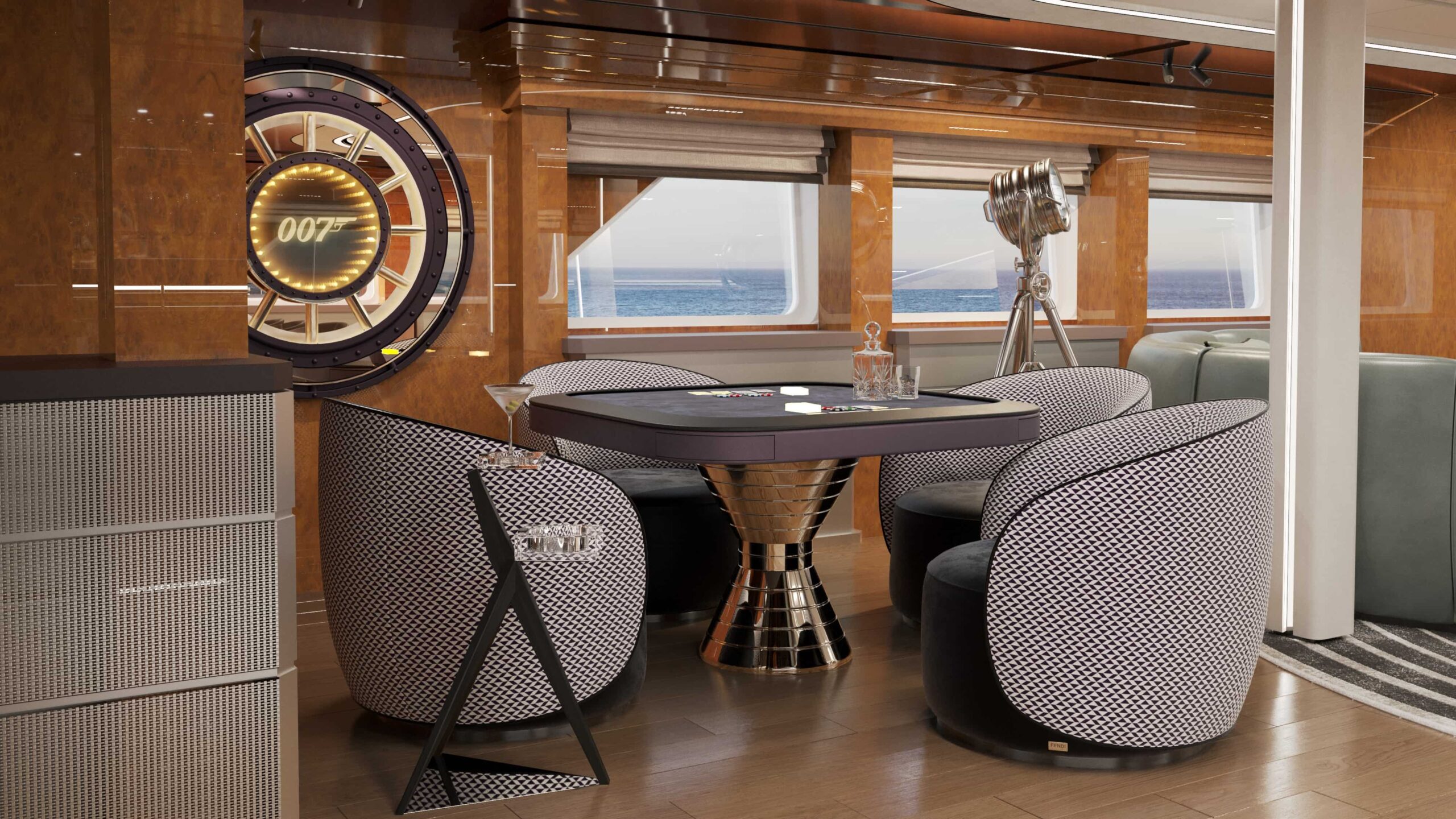
Technology has become a defining layer of contemporary yacht design. Today’s vessels don’t simply house climate systems, entertainment consoles, and lighting fixtures. They respond, learn, and adapt. They anticipate comfort needs and shift ambiance in a way that feels almost instinctive. Yet the core principle guiding high-end yacht interiors today is simple: technology should never dominate the space visually.
The most sophisticated systems now operate quietly beneath the surface, integrated so seamlessly that the interior reads calm, composed, and uninterrupted. This careful approach is known as invisible technology — a design philosophy where automation supports experience without disturbing aesthetic purity. The yacht becomes intelligent, but it remains serene.
Intelligent systems that shape the atmosphere
Modern yacht automation extends far beyond simple remote control of individual systems. Today’s integrated platforms create holistic environments that respond dynamically to occupancy, time of day, weather conditions, and learned preferences. The yacht develops a kind of environmental intelligence, maintaining optimal conditions without requiring constant human oversight.
Climate that adapts to people and place
Environmental comfort has moved far beyond thermostats. Climate systems now monitor temperature, humidity, airflow, and even patterns of use throughout the vessel. Sophisticated sensors track conditions in real-time, while learning algorithms identify preferences and patterns that allow predictive adjustment.
If a guest consistently prefers cool air at night, the cabin pre-adjusts before they enter. If the exterior deck is warm from sun exposure, interior cooling compensates subtly before occupants feel discomfort. The system considers not just current conditions but anticipated changes, adjusting proactively rather than reactively. On vessels with extended cruising itineraries, climate systems can even integrate weather forecasting data, preparing the interior environment for changing external conditions before they arrive.
The effect is felt, not seen. Occupants experience perfect comfort without encountering visible equipment, hearing mechanical noise, or touching controls. The system maintains ideal conditions invisibly, adjusting air temperature by fractions of a degree, modulating humidity within narrow optimal ranges, and ensuring consistent airflow without creating drafts. This creates an environment that simply feels right, without occupants being able to identify exactly why.
Lighting that follows natural rhythm
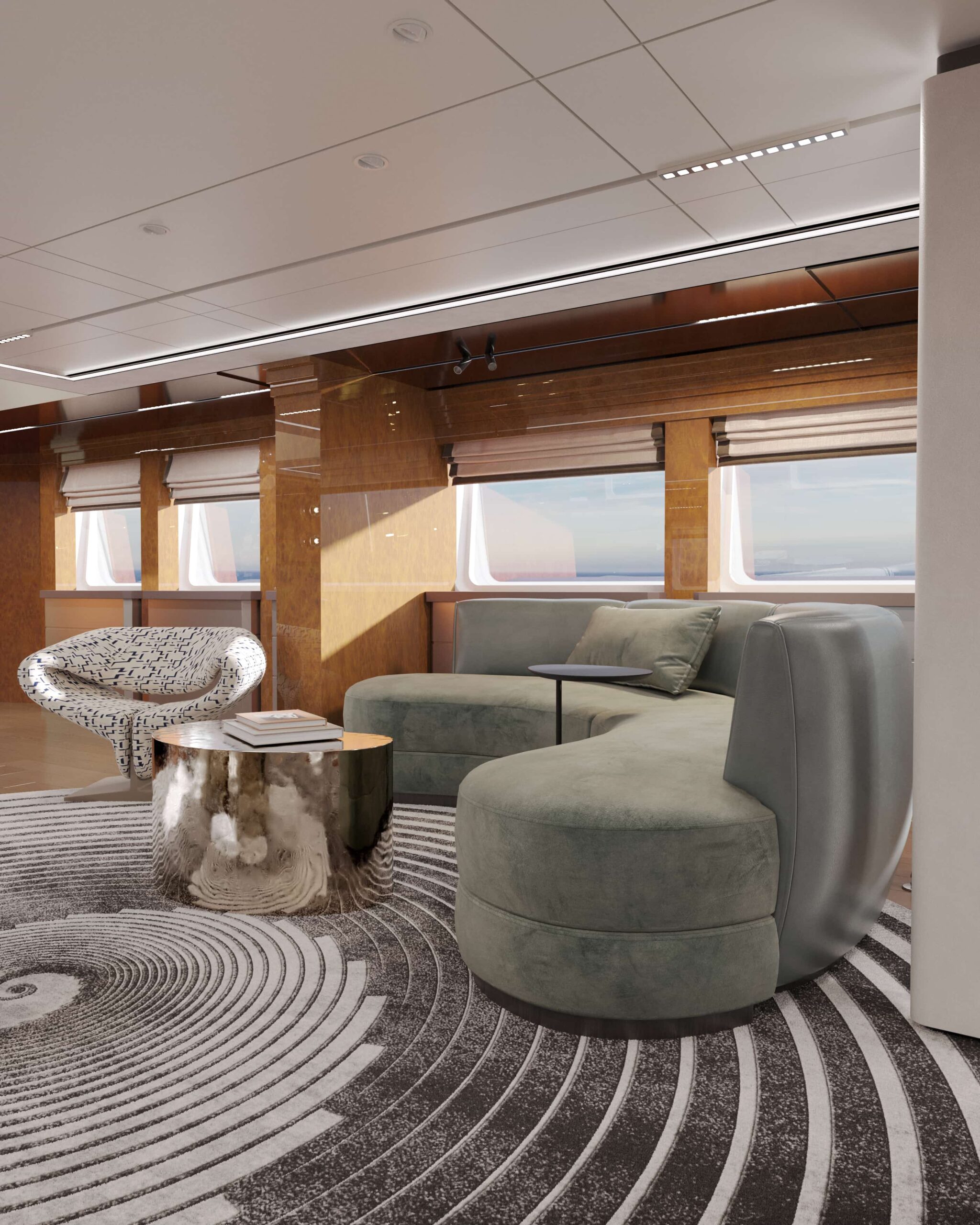
Lighting is one of the strongest emotional components of a yacht’s interior. It influences mood, affects perception of space, and fundamentally shapes how environments feel. Modern systems are programmed to evolve throughout the day, shifting from fresh morning light to softened evening warmth in ways that support natural circadian rhythms and enhance the experience of time spent aboard.
The purpose is not decorative drama. It is an atmospheric balance. Morning lighting might emphasize cool, energizing tones that help occupants wake naturally. Midday lighting balances natural sunlight entering through windows with interior illumination that prevents harsh shadows. Evening lighting gradually shifts toward warmer tones that encourage relaxation and prepare the body for rest. Late-night lighting provides gentle illumination for safe movement without disrupting sleep patterns.
Advanced systems don’t simply follow preprogrammed schedules. They monitor ambient light levels and adjust interior lighting to maintain consistent overall illumination as external conditions change. On overcast days, interior lighting subtly increases to compensate. When sunset arrives, the transition to evening lighting begins gradually and naturally. The system can even account for the yacht’s geographic location and orientation, adjusting for how natural light enters different spaces at different times.
Audio that fills space without revealing source
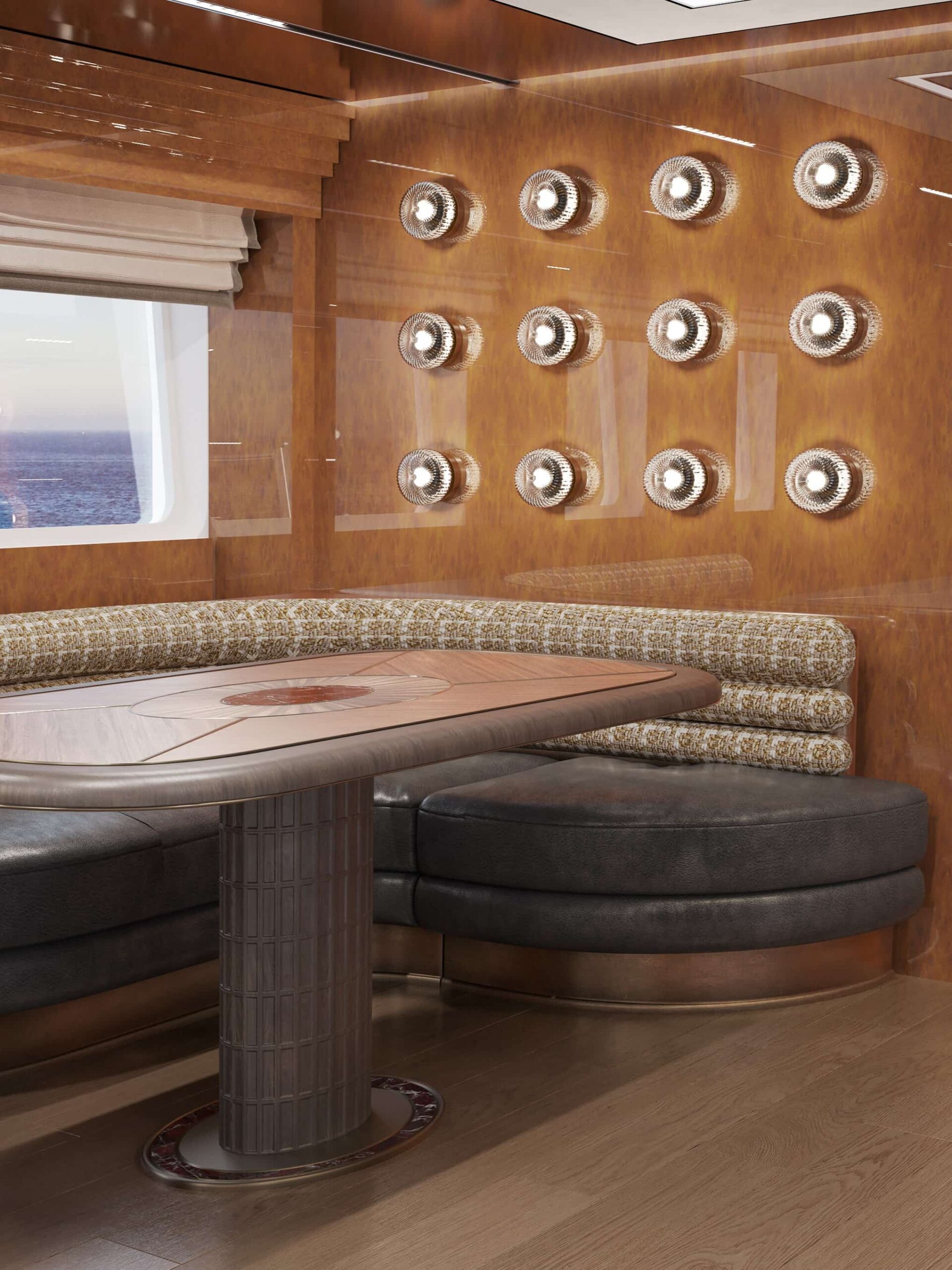
Speakers no longer appear as visible hardware. They are embedded behind fabric wall panels, concealed within ceiling structures, or integrated into architectural elements selected for acoustic transparency. The physical components that produce sound disappear entirely, leaving only the auditory experience.
Sound becomes part of the room, not something added to it. Music or audio content seems to emanate from the space itself rather than from specific point sources. This creates a more natural, enveloping listening experience while maintaining the visual purity of the interior design. In a main salon, background music fills the space evenly without visible speakers breaking up wall surfaces. In a master cabin, morning news audio plays clearly without equipment cluttering nightstands or entertainment centers.
The acoustic engineering required for this invisible integration is remarkably sophisticated. Designers must select concealment materials that allow sound to pass cleanly without muffling or distortion. They must position speakers to create even coverage throughout spaces while accounting for how furnishings and occupants affect sound propagation. They must integrate amplification and signal processing equipment in remote locations while ensuring cable runs don’t compromise audio quality. The result of this careful engineering is audio systems that deliver exceptional performance while remaining completely invisible.
Entertainment that appears only when needed
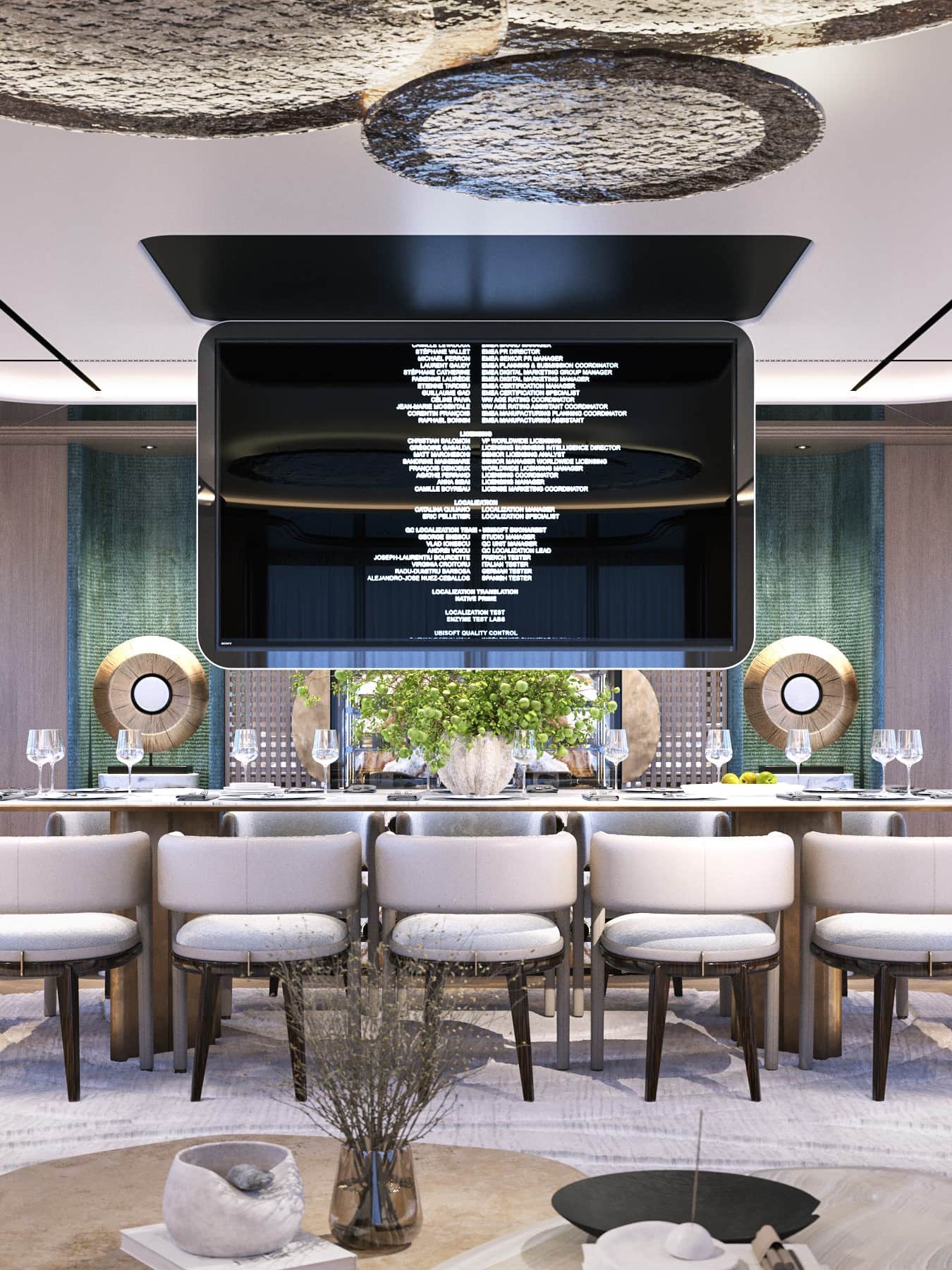
Screens don’t define a space anymore. They rise from furniture, descend from ceilings, rotate from wall panels, or emerge from surfaces that appear solid when displays are off. When not in use, the room returns to its original visual state — uninterrupted and composed.
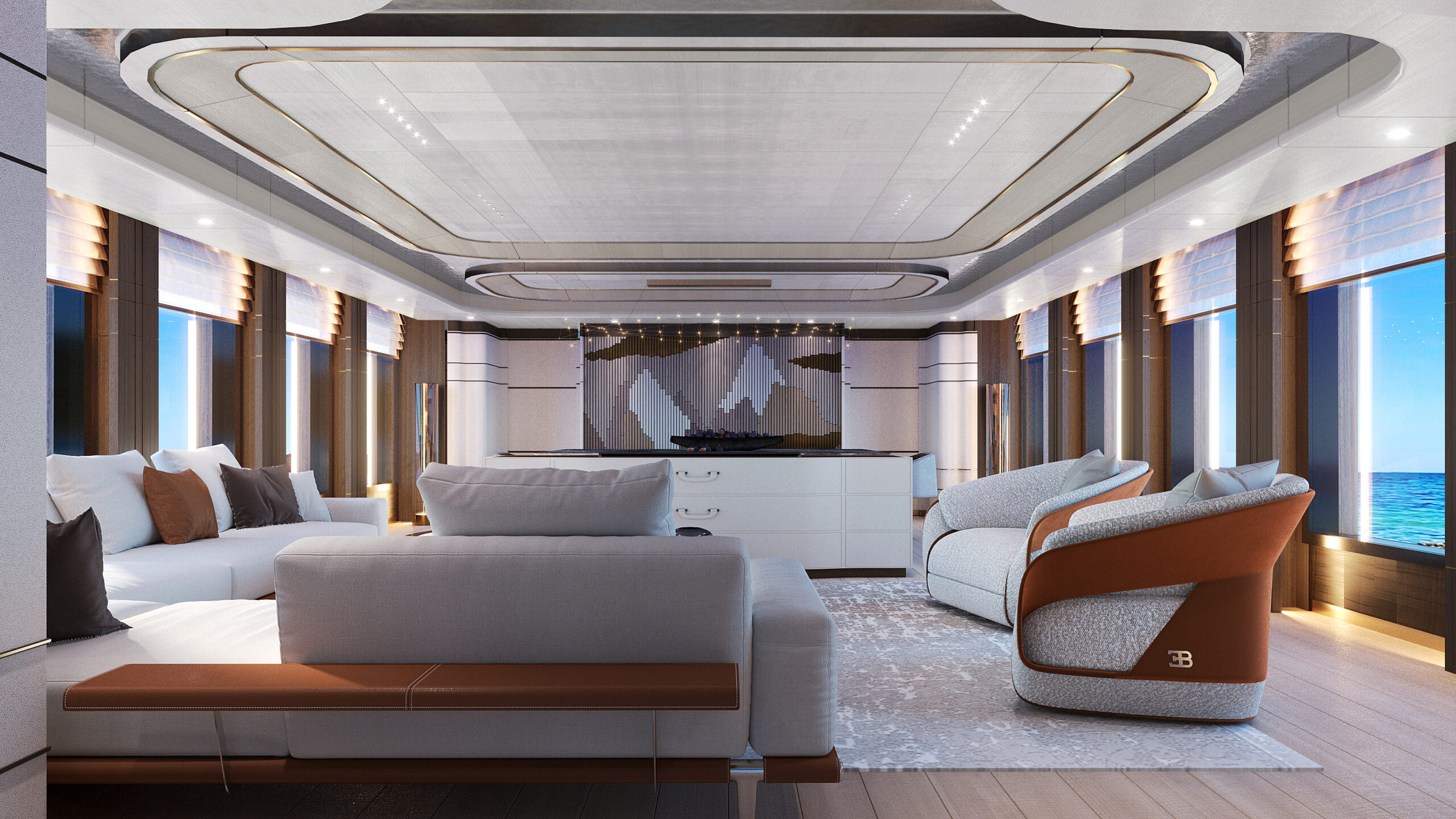
In a main salon, a large television screen might lift from a credenza only when someone wants to watch content, then descend completely out of sight afterward. The credenza simply appears as a beautiful furniture piece displaying decorative objects, with no hint of the technology concealed within. In a master cabin, a screen might descend from a ceiling panel faced with exotic wood veneer, position itself for optimal viewing angle, then retract to reveal an unbroken architectural surface.
The yacht feels effortless because the technology behaves like part of the architecture. Entertainment systems don’t demand constant visual presence as a reminder of their capability. Instead, they appear precisely when wanted and disappear completely when not needed, allowing spaces to serve multiple purposes without compromise. A formal dining area remains formal until someone wants to watch a sporting event, when it transforms instantly into an entertainment space, then returns to its original character afterward.
Material-integrated interactions
The most refined technology integration happens at the material level, where controls and interfaces are embedded directly into the surfaces that define yacht interiors. This approach eliminates the need for separate control devices, allowing interaction to happen through the architecture itself in ways that feel natural and intuitive.
Touch-control surfaces built into materials
One of the most refined innovations in yacht interiors is the material-integrated control surface. These systems transform ordinary architectural surfaces into responsive interfaces that reveal controls only when touched, then return to their original appearance when interaction ends.
A bar counter, bedside table, or wall panel looks like pure veneer, stone, or leather — materials chosen for their tactile quality and visual beauty. Touch it, and softly illuminated controls appear beneath your fingertips, glowing through the surface material with graphics that indicate available functions. The controls respond to gesture and touch with the same fluid responsiveness as a smartphone, yet they’re integrated into surfaces that feel authentically material rather than obviously technological.
Lift your hand, and the surface returns to seamless material. The controls fade away completely, leaving no visible indication that the surface offers any functionality beyond its architectural purpose. This keeps the interior visually quiet while preserving intuitive interaction. Occupants can adjust lighting, temperature, entertainment systems, or window treatments directly through surfaces they’re already touching naturally, without searching for remotes or wall panels.
Voice control without visible devices
Microphones and speakers are hidden completely within ceiling structures, furniture, or architectural elements. The interaction is natural speech, not interface navigation, allowing occupants to control yacht systems through conversation rather than through learned command sequences.
The system understands context, tone, and preferred language, responding cleanly to requests phrased in natural ways. Rather than requiring precise commands like “Set salon temperature to 22 degrees Celsius,” occupants can simply say “I’m feeling warm,” and the system responds appropriately. Advanced artificial intelligence learns individual speech patterns, preferences, and habits over time, becoming more accurate and helpful with continued use.
Technology becomes invisible not because it is hidden, but because it is well-behaved. Voice control systems on modern yachts don’t interrupt conversations or misinterpret casual speech as commands. They respond only when addressed, confirm actions briefly without being intrusive, and handle complex requests that would be cumbersome through traditional interfaces. The result is interaction that feels natural and effortless, as if the yacht itself is listening and responding helpfully.
Materials that support invisible performance
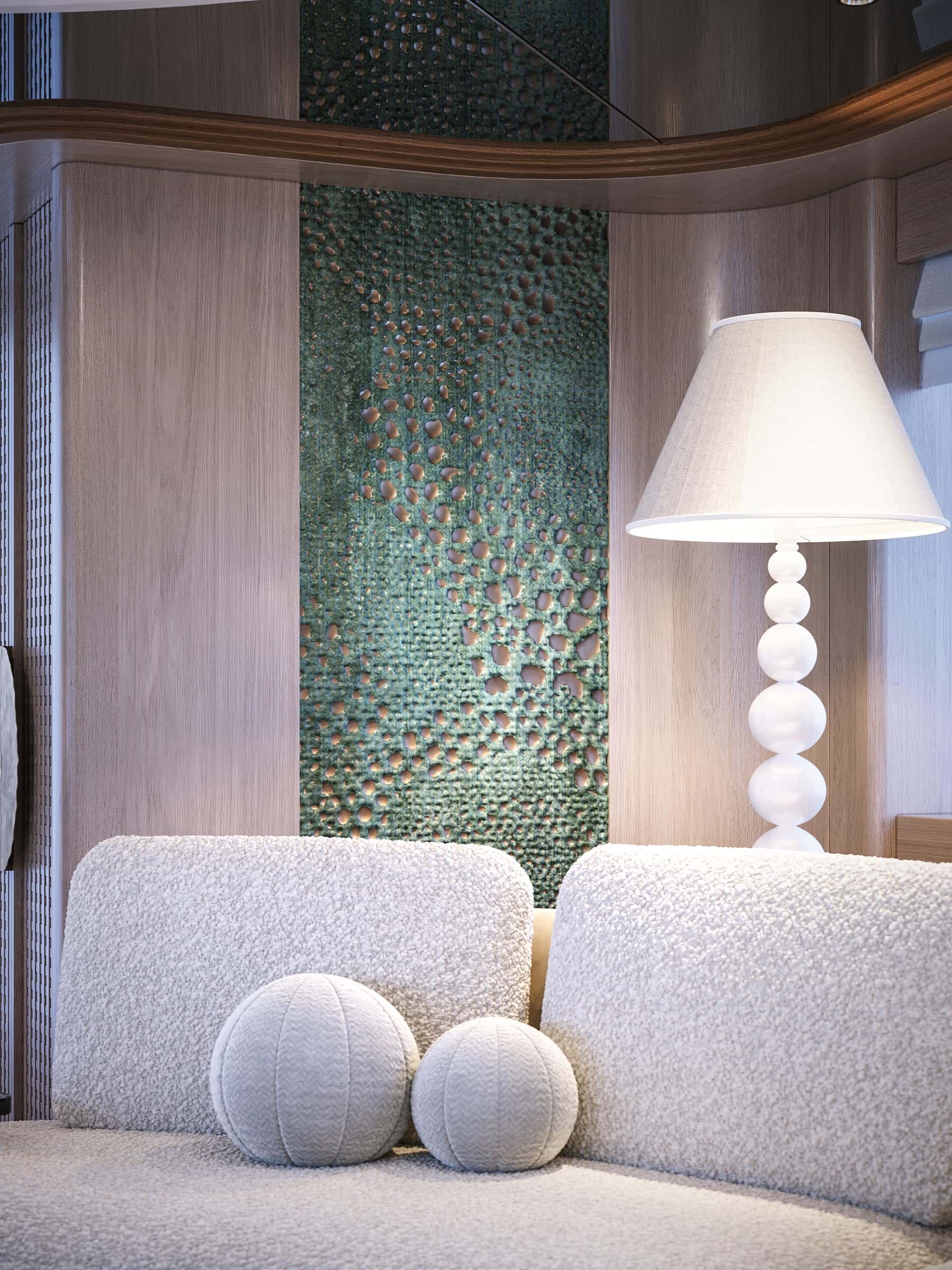
The selection of interior materials now considers not just aesthetic and tactile qualities but also how materials can support embedded technology. This dual consideration means that surfaces throughout the yacht serve both decorative and functional purposes, creating interiors where beauty and capability coexist seamlessly. For example, wood, stone, textile, and mirror can act as functional layers:
- Veneers can be milled and layered to allow subtle lighting from beneath.
- Fabric wall panels can be selected for acoustic transparency.
- Stone surfaces can house touch control logic within micrometer layers.
- Mirror and lacquer finishes can conceal displays until activated.
The materials remain authentic; nothing looks engineered. The technology adjusts to the materials, not the reverse.
Designing for longevity and future updates
Yachts last decades. Technology evolves quickly. To avoid dated systems and outdated capabilities, interiors are built with future adaptation as a core consideration from initial design phases.Centralized equipment hubs instead of scattered hardware
- Modular system architecture
- Routing channels planned for expansion
- Software layers that can be updated without altering interiors
This means the yacht remains graceful, not patched. Technology updates happen invisibly, maintaining the interior’s refined appearance while ensuring capability remains current. The interior doesn’t age — it matures, gaining sophistication and capability while maintaining its timeless aesthetic character.
Smart technology in yacht interiors has matured into a discipline that enhances experience without compromising design. Through invisible integration, intelligent automation, and thoughtful material selection, contemporary yachts achieve a synthesis where advanced capability and refined aesthetics coexist perfectly. The technology works so seamlessly that it becomes transparent, allowing occupants to focus entirely on the experience of being aboard rather than on the systems making that experience possible.