Materials that withstand the sea: choosing finishes for yacht interiors
There’s a moment in every yacht interior project when reality hits. You’ve fallen in love with a particular fabric — the texture is perfect, the color captures exactly what you envisioned. Then the marine specialist gently explains why it won’t work at sea. Six months of humidity and salt air would turn your dream material into a maintenance nightmare.
This scene plays out repeatedly because land-based design and yacht design operate under fundamentally different rules. That leather that ages beautifully in a countryside estate? It develops mildew at sea. The exotic hardwood that brings warmth to a penthouse? It warps and cracks. The delicate upholstery that defines luxury ashore? It fades within a season.
Yet yacht interiors should feel luxurious. The question isn’t whether you can achieve beauty at sea. It’s about understanding which materials deliver both the performance marine environments demand and the sophistication discerning owners expect. This article explores marine-grade fabrics, woods, composites, and innovative coatings that combine durability with genuine luxury.
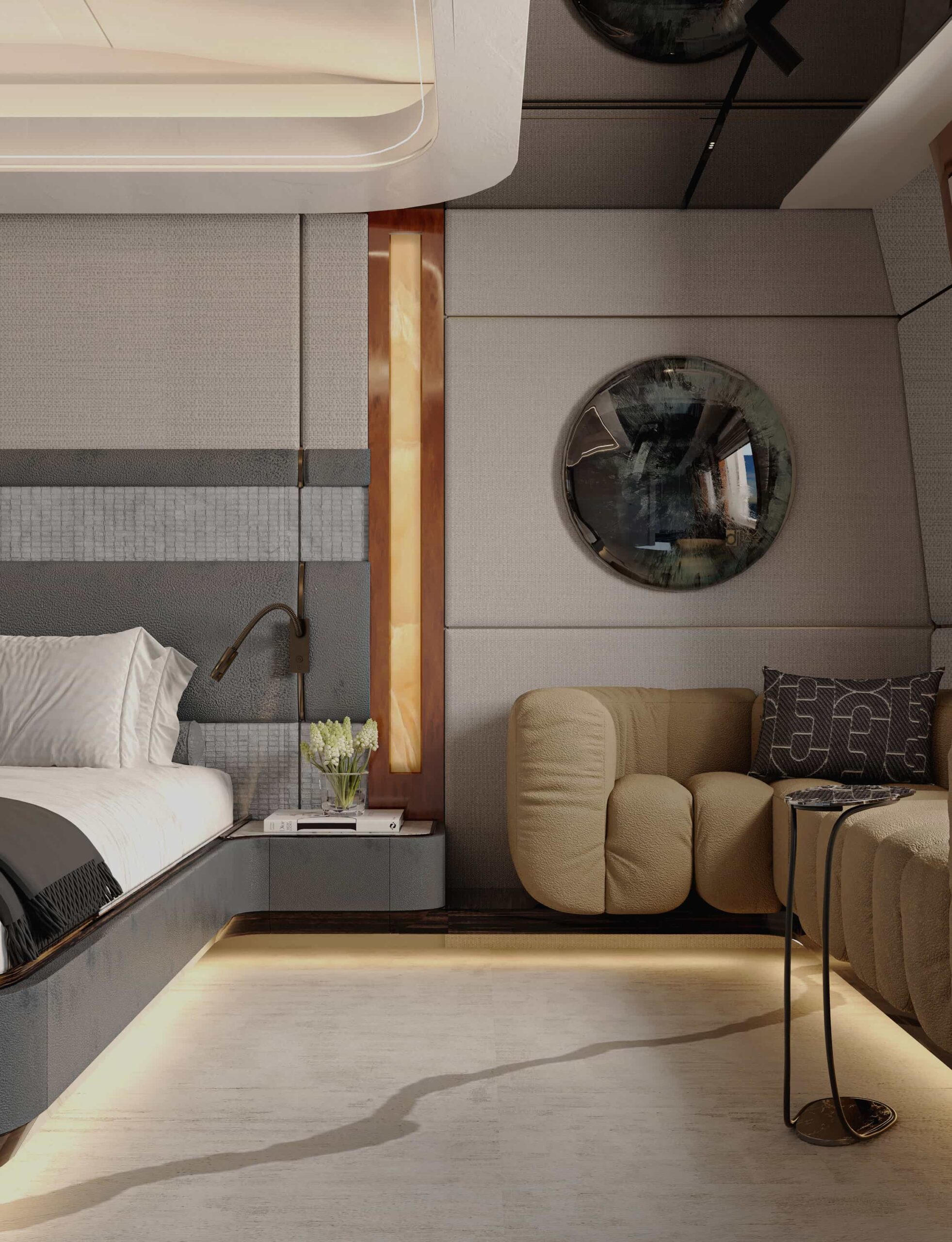
Why the marine environment changes everything
Before exploring specific materials, it helps to understand what makes the marine environment so uniquely demanding. It’s not just one factor but the combination of multiple stresses acting simultaneously and constantly.
- Salt air penetrates everywhere, working its way into the finest crevices, accelerating the degradation of materials that seem well-protected. Even in climate-controlled interiors, salt finds its way through doors, hatches, and ventilation systems.
- Humidity fluctuates dramatically. A yacht closed up in tropical heat might reach extreme conditions, then get air-conditioned rapidly when owners arrive. These cycles cause materials to expand and contract repeatedly, revealing weaknesses that wouldn’t appear in stable environments.
- UV radiation at sea operates at a different level than on land. Without buildings or trees providing shade, sunlight hits with intensity that degrades fabrics, fades finishes, and breaks down certain composites faster than most people anticipate.
- Movement never stops. Even moored in calm conditions, a yacht moves subtly. Under way or in weather, everything flexes constantly. This ongoing stress tests every joint, every adhesive bond, every material connection.
The combination of these factors is what makes marine material selection so specialized. A material might handle salt fine but fail under UV exposure. Another might resist humidity but crack under constant movement.
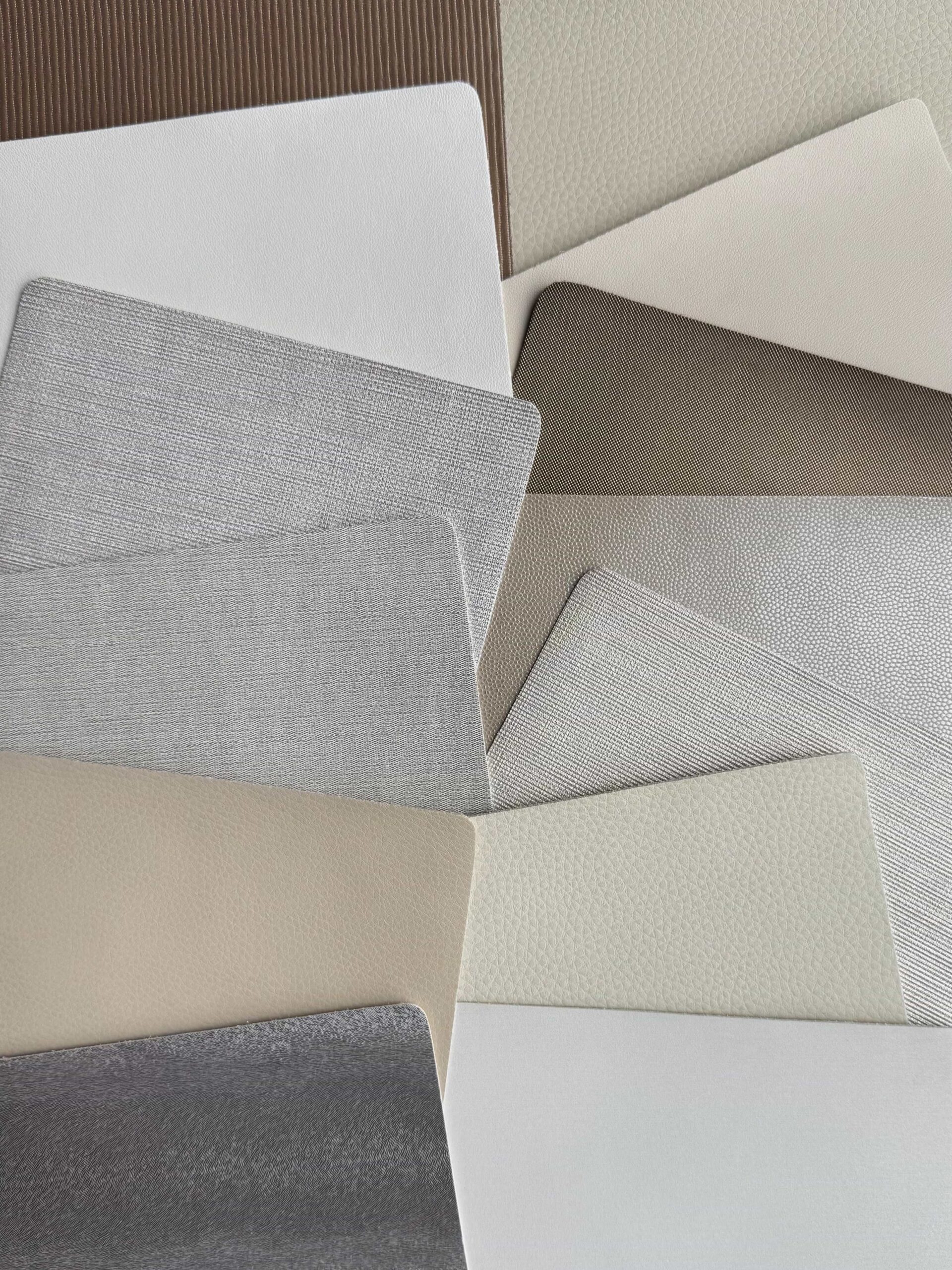
Marine-grade fabrics: performance meets comfort
Fabric selection might be the single most important material decision in yacht interiors. Upholstery, curtains, and cushions are what you touch and see constantly. Get them wrong and the entire interior feels compromised.

Outdoor performance fabrics
The most reliable yacht fabrics are actually outdoor performance textiles originally developed for exterior furniture. Many brands have been refined over decades, specifically for marine conditions. These fabrics use solution-dyed acrylic fibers where color is embedded throughout the fiber rather than applied to the surface. This makes them remarkably fade-resistant even under intense UV exposure. They’re also designed to resist mildew, dry quickly, and clean easily.
The challenge is making them feel luxurious rather than utilitarian. Early marine fabrics felt stiff and looked obviously synthetic. Modern versions have become surprisingly sophisticated. More soft hand feel, rich textures, and patterns that don’t immediately announce “marine fabric.”
Crypton and similar technologies
Crypton represents another approach. Treating fabrics to make them moisture-resistant and stain-proof while maintaining natural fiber content. The treatment encapsulates each fiber in a protective barrier that repels liquids and prevents bacterial growth. This allows you to use fabrics that feel like cotton, linen, or wool blends while gaining significant performance benefits. Crypton-treated fabrics work well in interior cabins where UV exposure is limited but humidity and potential spills are concerns.
The limitation is durability. While Crypton significantly extends fabric life compared to untreated materials, it doesn’t match the longevity of solution-dyed acrylics in harsh conditions. We typically reserve these for master cabins and interior spaces where the comfort of natural-feeling fabrics justifies more frequent replacement.
Ultraleather and marine vinyl
For applications requiring the look of leather without the maintenance challenges, ultraleather and premium marine vinyls offer compelling alternatives. These synthetic materials resist moisture, clean easily, and don’t develop the mildew issues that plague real leather at sea.
Real leather can work in yachts, but only with serious commitment to maintenance. It needs regular conditioning, climate control, and immediate attention to any moisture exposure. Some owners accept this for master suite applications where they want authentic materials and are willing to invest in upkeep.
Wood: balancing beauty and stability
Wood brings warmth and richness to yacht interiors in ways that synthetic materials simply can’t replicate. But solid timber at sea is asking for trouble. The solution lies in engineered approaches that preserve wood’s beauty while managing its tendency to move with humidity changes.
Veneered joinery
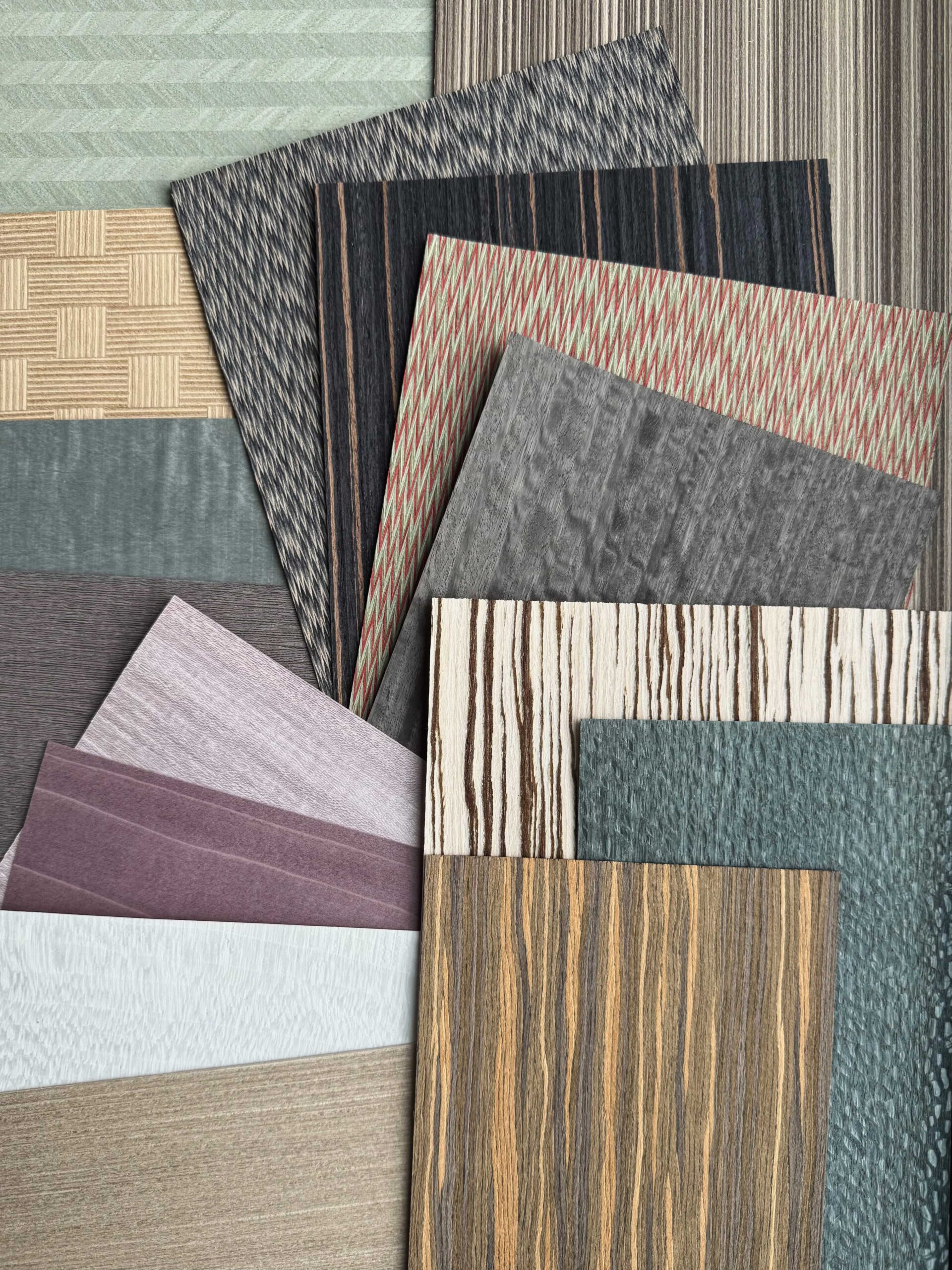
Most quality yacht joinery uses composite substrates with real wood veneer faces. The substrate, typically marine-grade plywood or phenolic core, provides dimensional stability. The veneer provides the beauty of natural wood. This construction allows the underlying structure to remain stable while the thin veneer layer can expand and contract slightly without visible effect. Proper execution includes sealed backs, appropriate adhesives, and finished edges that prevent moisture infiltration.
Veneer selection matters enormously. Quarter-sawn cuts are more stable than flat-sawn. Some species handle marine conditions better than others. Teak, walnut, and certain oaks perform well. Highly figured woods can be more temperamental.
Solid wood applications
Solid wood still has its place, primarily in smaller applications where movement can be accommodated. Trim pieces, handrails, and certain furniture components work well in solid timber if properly detailed.
Teak remains the gold standard for marine applications. Its natural oils resist moisture, it weathers beautifully even with exposure, and it has centuries of proven performance at sea. It’s expensive, but for exterior-adjacent applications or high-wear areas, teak often justifies its cost.
The key with solid wood is allowing for movement. Joinery needs to accommodate expansion and contraction. Finish schedules need to be appropriate for marine exposure. And maintenance requirements need to be clearly understood from the start.
Engineered woods and bamboo
Engineered wood products designed for marine use offer another option. These materials use real wood fibers in a stabilized matrix that resists movement. They can be specified in larger pieces than veneer allows while maintaining better stability than solid wood.
Bamboo, technically a grass rather than wood, has gained attention for yacht applications. It’s dimensionally stable, rapidly renewable, and can be manufactured into various formats from veneer to solid planks. High-quality bamboo products perform well in marine environments when properly finished and sealed.
Marine-grade composites: the modern alternative
Composites represent the cutting edge of marine interior materials. These engineered materials combine performance characteristics that natural materials can’t match while achieving increasingly convincing aesthetics.
Solid surface materials
Corian and similar solid surface materials work beautifully at sea. They’re non-porous, resist moisture completely, can be formed into seamless installations, and repaired easily if damaged. For countertops, vanity tops, and integrated sinks, solid surface materials solve multiple problems elegantly. They can be thermoformed into curved shapes that match hull lines. Seams can be made virtually invisible. And they’re available in colors and patterns ranging from subtle to dramatic.
The main limitation is heat resistance because hot pots need trivets. But for most yacht applications, this isn’t problematic. The performance benefits far outweigh this minor constraint.
Lightweight stone alternatives
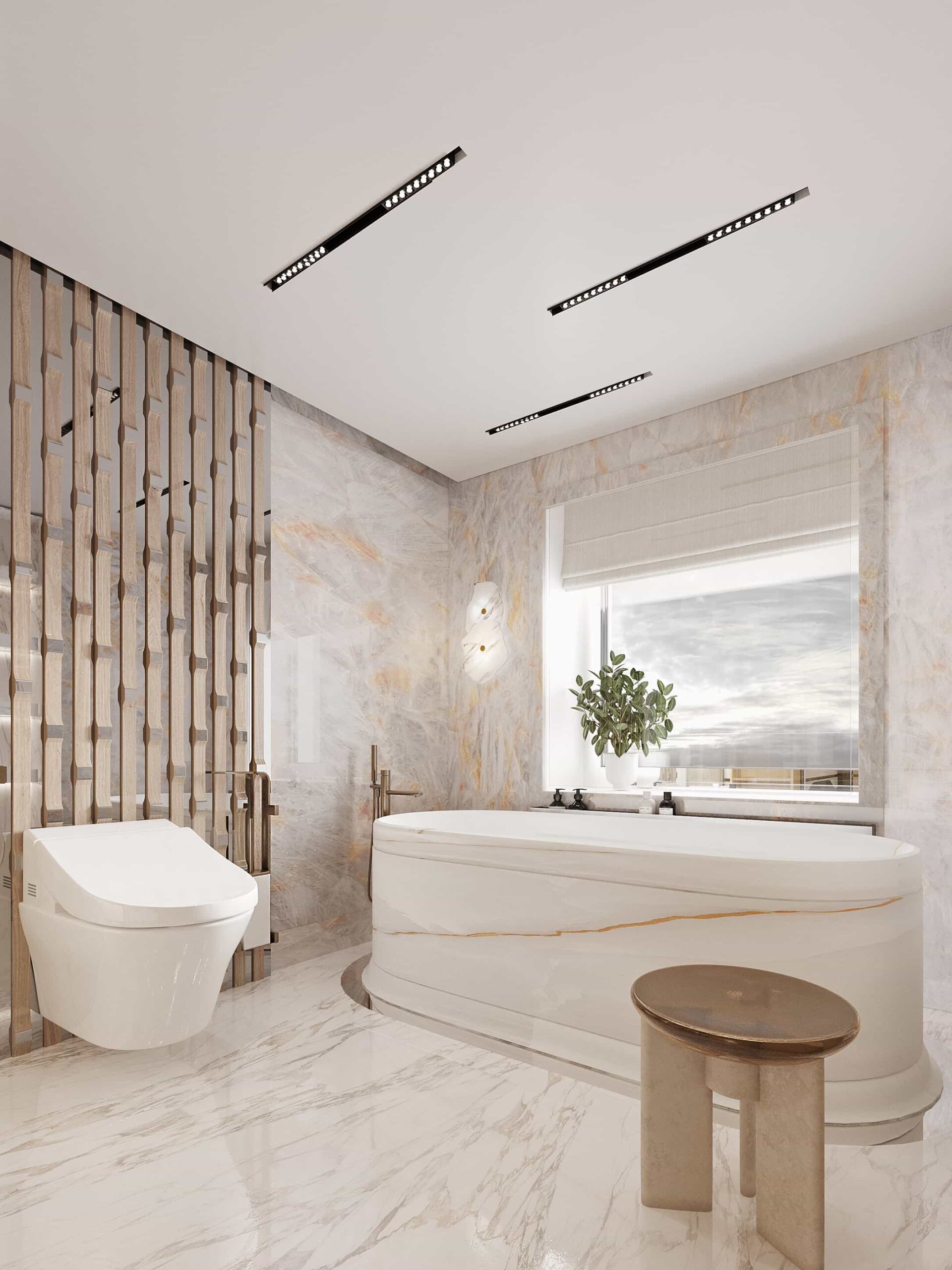
Real marble or granite poses two problems at sea: weight and susceptibility to staining. Lightweight composite alternatives address both issues. Products like porcelain slabs or lightweight stone composites replicate the look of natural stone at a fraction of the weight. This matters enormously on yachts where every kilogram affects performance and fuel efficiency.
These materials offer additional benefits because they’re non-porous, resist staining, handle impacts better than natural stone, and can be fabricated with thinner profiles. For galley counters or bathroom vanities, they often outperform real stone while looking virtually identical.
High-pressure laminates
Don’t dismiss laminates. Modern high-pressure laminates (HPL) have become sophisticated materials that can replicate virtually any surface. Wood grains, stone patterns, solid colors, and even textile looks are available in durable, lightweight formats.
Premium HPL products designed for marine use resist moisture, UV exposure, and impact damage while maintaining their appearance for years. They work particularly well for larger panel applications where weight and cost make other materials impractical. The key is using them appropriately. Edge treatments need to be carefully detailed. Applications should play to HPL’s strengths rather than trying to pass it off as something it’s not.
Innovative coatings and surface treatments
Final surface treatments often prove as important as underlying materials. Marine coatings have evolved dramatically, offering protection and aesthetics impossible even a decade ago. Contemporary two-part polyurethane lacquers provide exceptional wood surface protection. They’re engineered with flexibility to accommodate wood movement, hardness to resist scratching, and chemical resistance to handle cleaning products.
Clear coatings incorporating UV inhibitors protect underlying materials from sun damage while maintaining transparency. The reality is that UV protection degrades gradually and requires periodic renewal. Emerging nano-coatings create invisible molecular-level barriers that make surfaces water-repellent, resist fingerprints, or prevent bacterial growth. While requiring periodic reapplication, they add valuable performance layers to yacht interiors.
Making informed material decisions
With all these options available, how do you actually make decisions? Here’s the approach we use at OLT DESIGN.
- Assess exposure levels first. Materials in sun-exposed locations need maximum UV resistance. Moisture-prone areas near doors or heads need waterproof options. Protected interior locations allow broader choices.
- Consider maintenance preferences. Some owners embrace regular maintenance for natural materials they love. Others prefer minimal-maintenance solutions. Your approach should fundamentally guide specifications.
- Think about replacement cycles. Yachts with regular refits every five to seven years allow different material choices than those planning much longer lifespans.
- Account for weight. On smaller yachts, particularly, material weight impacts performance. Lightweight alternatives might justify premium pricing through improved efficiency.
- Prioritize strategically. Invest in premium materials for high-visibility areas that define the yacht’s character. Specify more economical options where performance requirements allow.
Today’s marine-grade materials achieve genuine sophistication. Performance fabrics feel like luxury textiles. Engineered woods deliver natural warmth without instability. Composite surfaces replicate exotic materials while outperforming them in harsh marine conditions. The key is understanding trade-offs between aesthetics, performance, maintenance, cost, and weight. There’s rarely a single “best” choice, just the right choice for your specific circumstances and how you actually use your yacht.
At OLT DESIGN, material selection is where technical knowledge meets design vision. We’ve spent years learning which materials deliver on their promises and which disappoint. If you’re planning a yacht interior project, the material conversation should happen early. These decisions cascade through design, budget, and long-term satisfaction.