How to design a home gym that keeps you motivated instead of collecting dust?
Today, we are witnessing a profound shift in the way people think about health. Taking care of your health is no longer a seasonal goal before summer holidays — it has become one of life’s most valuable investments. Thanks to advances in medicine, preventive healthcare and biohacking, people are living longer than ever before. But longevity alone is no longer enough. The real ambition is healthspan — living those extra years with strength, energy and independence.
This shift is changing the way we design our homes.
Every residence includes the essentials: bedrooms, a living room and a kitchen. But when a project offers additional space, the question becomes: what truly improves everyday life?
A decade ago, homeowners often prioritised home cinemas, wine cellars or game rooms. Today, one of the strongest requests in luxury residential design is a private luxury home gym combined with a dedicated wellness area. It is no longer simply a room for exercise. It is a space designed to support better habits, improve quality of life and make daily movement feel effortless.
There is, however, one challenge that architects and homeowners encounter surprisingly often.
According to industry research, many home fitness machines become little more than expensive clothes racks within a few months. The problem is rarely a lack of motivation. More often, it is poor home gym design. When the environment feels dark, uncomfortable or disconnected from the rest of the home, even the best equipment struggles to become part of a daily routine.
So how do you create a luxury gym design that people genuinely enjoy using — not just during the first few weeks after moving in, but for years to come?
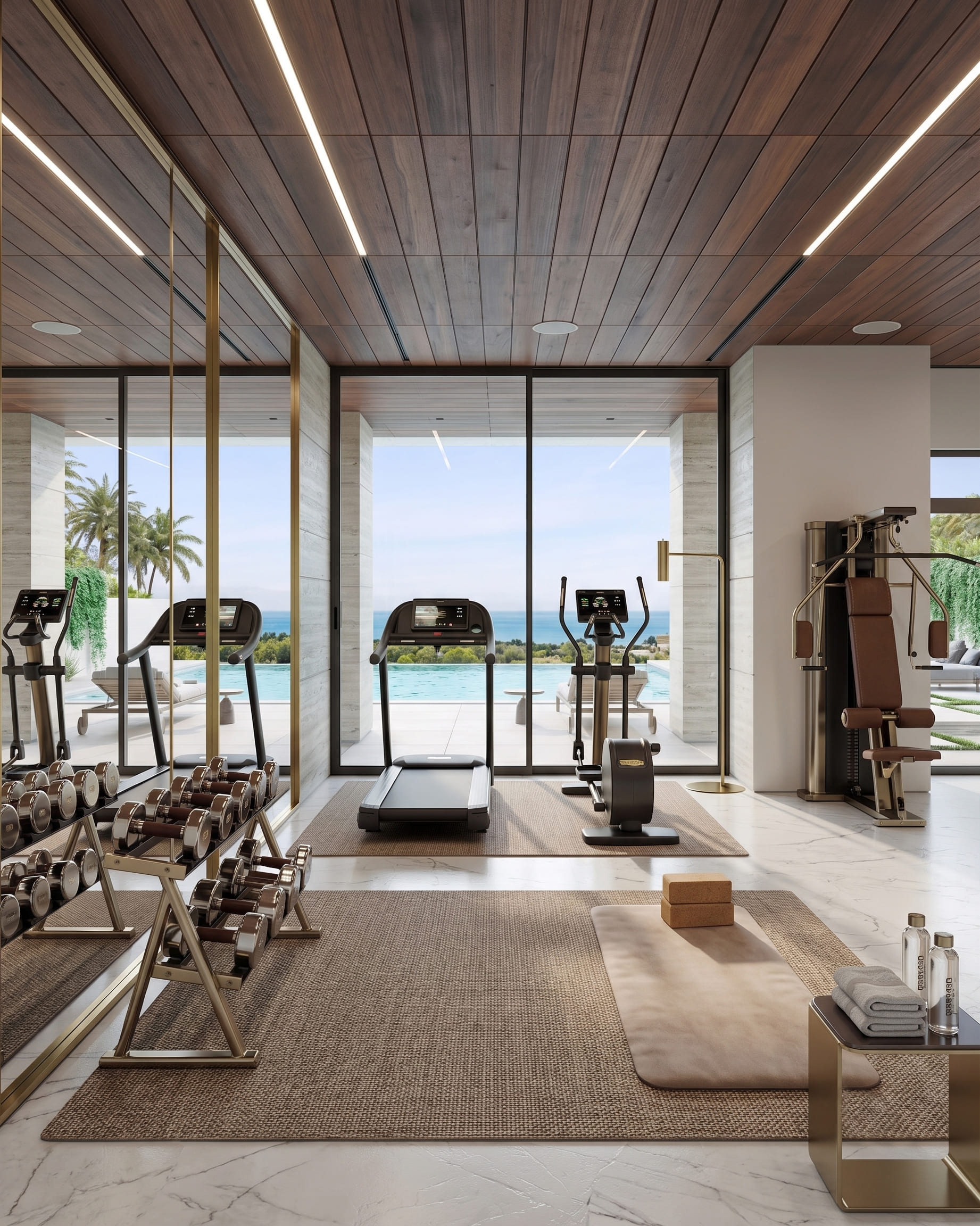
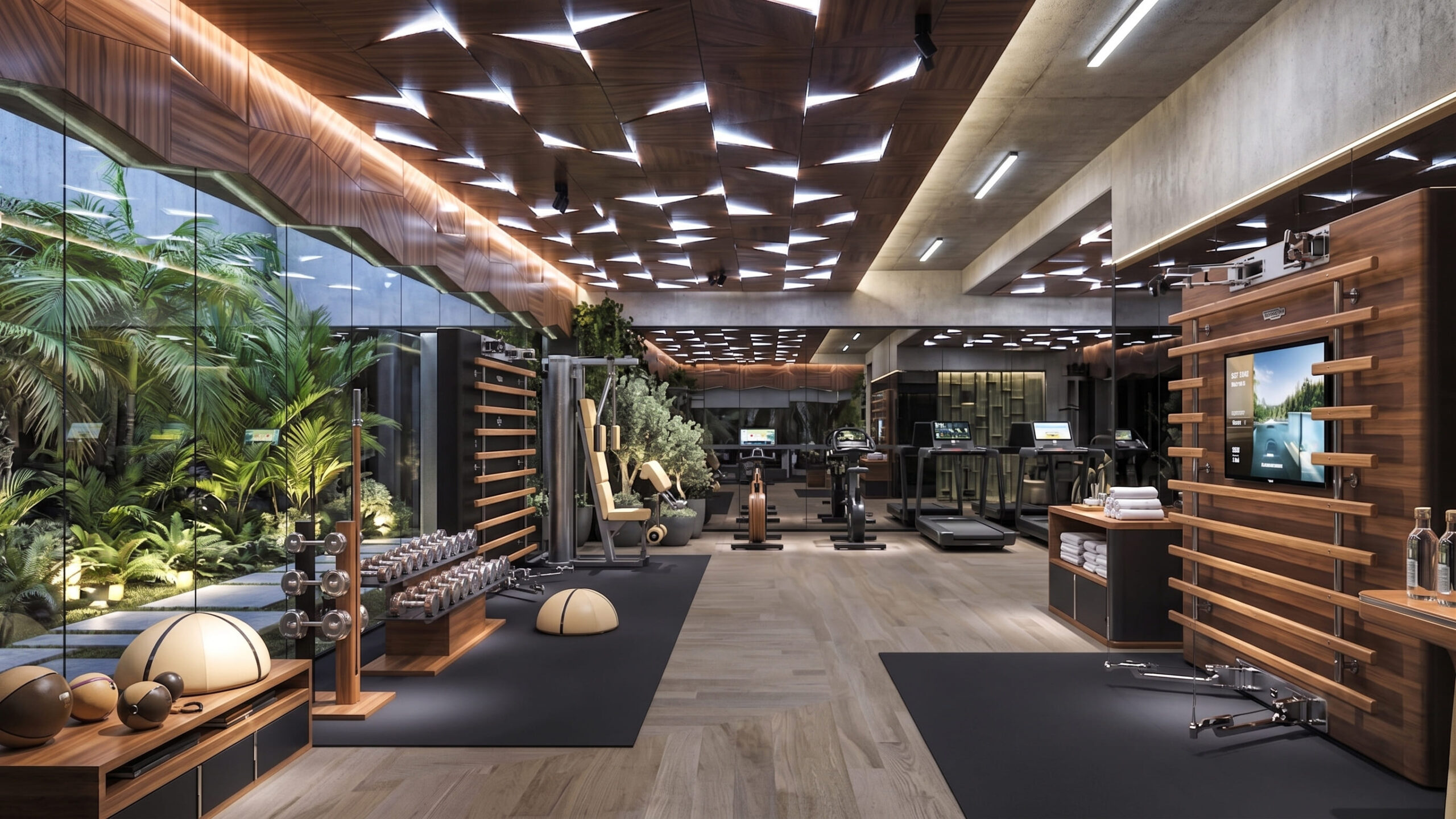
The Psychology of Space: Where Does the Real Mistake Hide?
One of the most common mistakes in home gym design happens long before the first piece of equipment is installed.
The gym is often assigned to a basement, lower-ground floor or a windowless room left over after the main living spaces have already been planned. The reasoning sounds perfectly logical: “Nobody really lives there anyway, so that’s where the treadmill should go.”
This is where many projects quietly begin to fail.
From an evolutionary perspective, people naturally respond better to bright, open environments with generous ceiling heights and visual depth. If every workout starts in a dark room with stale air and little connection to the outside, the brain gradually begins to associate exercise with discomfort rather than achievement.
That does not mean a basement can never become an exceptional private gym design.
On the contrary, a properly designed lower-ground level can offer privacy, generous floor area and excellent acoustic separation. The difference lies in the design itself. Adequate ceiling height, high-performance ventilation, carefully layered lighting and strong visual focal points completely change the experience of the room. Many of these principles are equally important when creating a luxury basement design, where natural light may be limited but comfort should never be.
The real mistake is not placing the gym in the basement. It is treating the space as an afterthought instead of designing it as a place people genuinely want to return to.
The Secret to Motivation: Views, Light and Biophilic Design
For a treadmill or strength station to genuinely attract you day after day, the room needs to become more than a place to exercise. It should feel comfortable, inspiring and intentionally designed around the way people experience movement. Great home gym design begins long before choosing equipment.
A View That Keeps You Moving
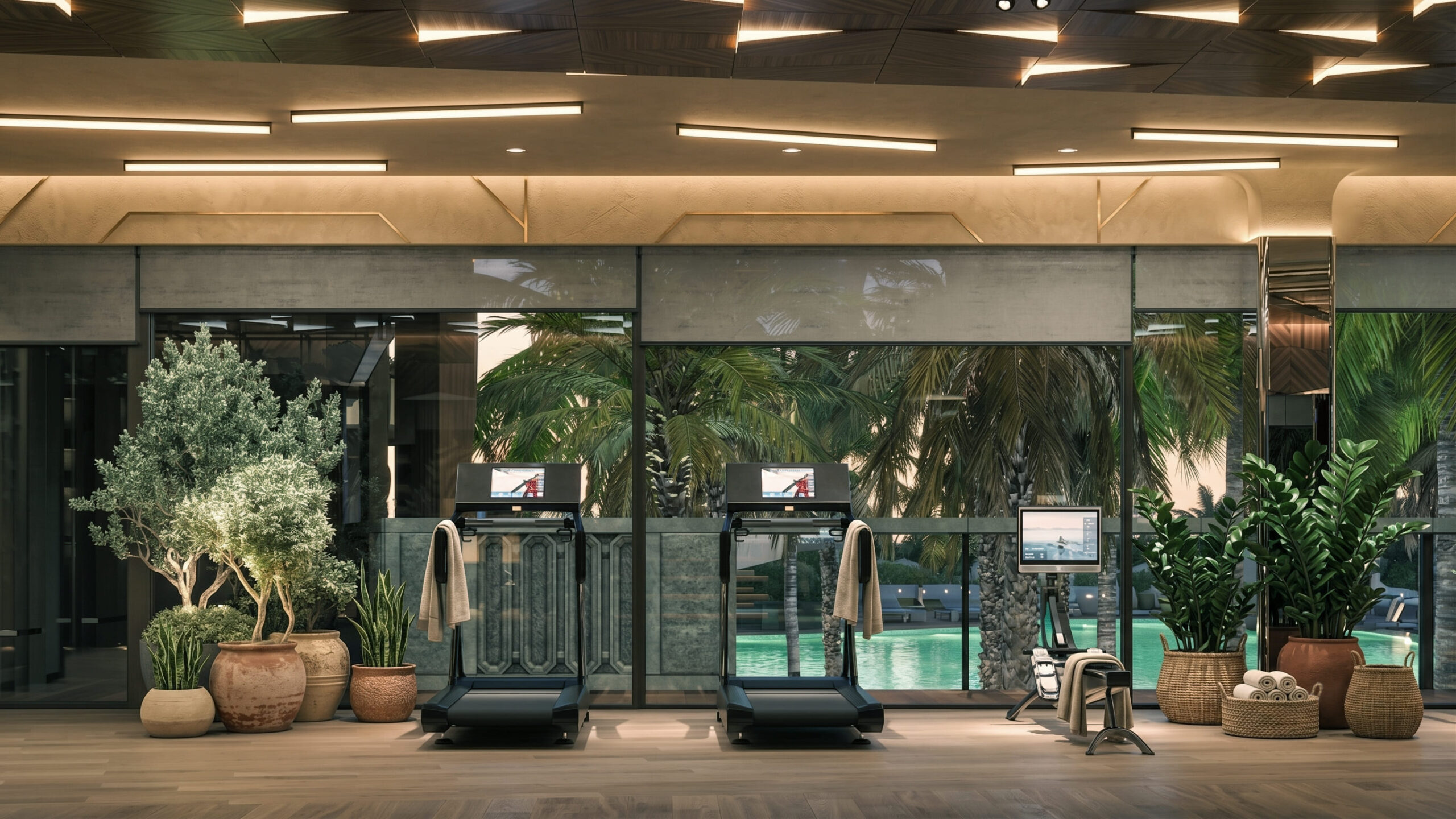
When you’re running on a treadmill or cycling indoors, your eyes naturally look forward. Ideally, they should meet a panoramic view of a garden, forest, water or a dynamic city skyline.
This is where biophilic design comes into play. Looking at nature has been shown to reduce stress levels, improve focus and make repetitive exercise feel significantly more enjoyable. Before you realise it, forty minutes have passed.
If natural views aren’t available, the same principle can be interpreted differently. Large-scale landscape artwork, green walls or carefully illuminated feature panels can introduce visual depth and make the room feel far less enclosed.
Lighting That Works With Your Body
Blinding office-style ceiling lighting is rarely the best solution for a home gym, especially when the light shines directly into your eyes during bench presses or floor exercises.
Instead, lighting should adapt to different activities. Soft, diffused light creates a calm atmosphere for yoga, stretching and recovery, while brighter lighting with a daylight spectrum helps energise morning cardio sessions.
Rather than simply illuminating the room, well-designed lighting supports the body’s natural circadian rhythms and subtly influences how the space feels throughout the day.
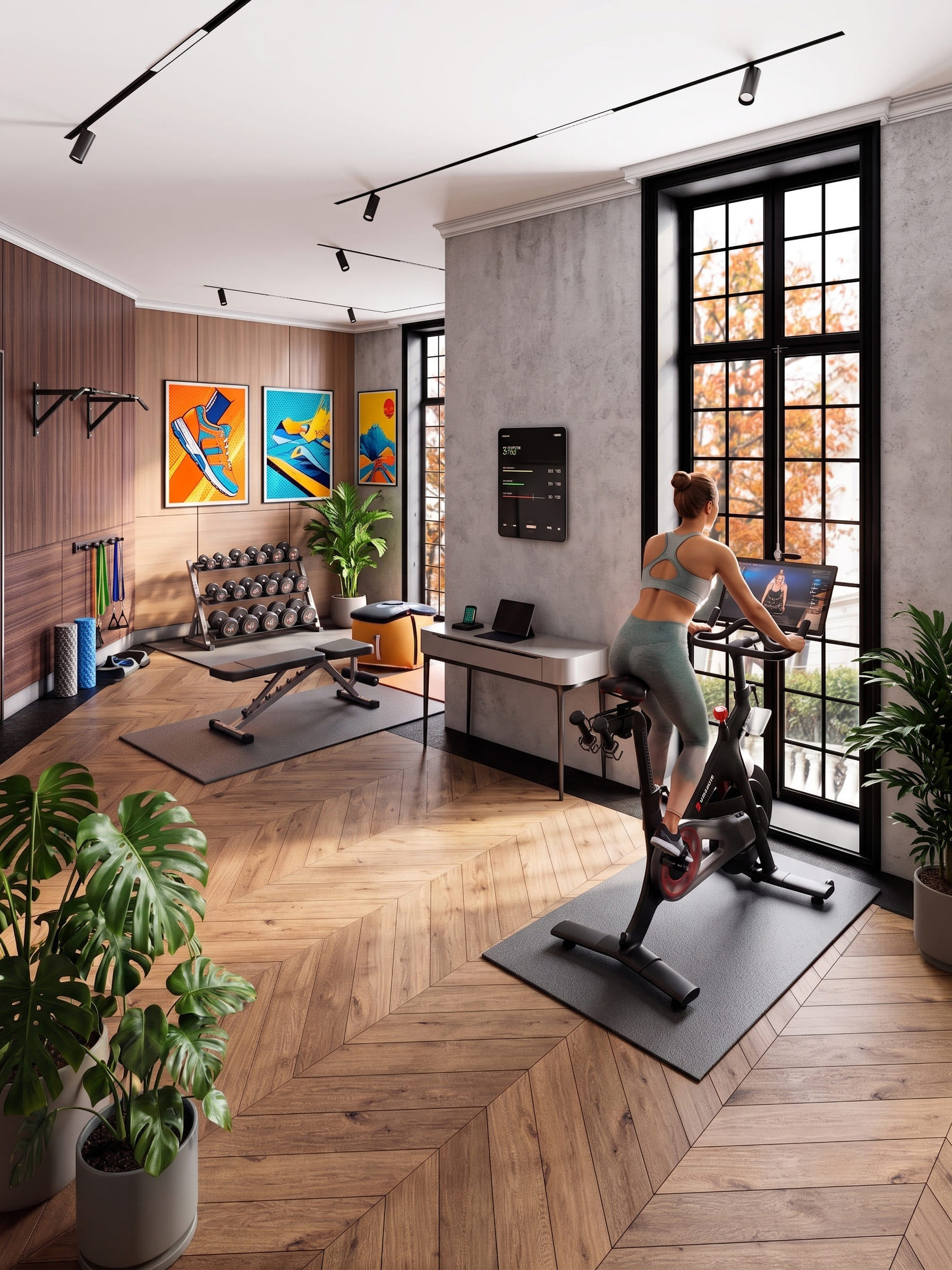
Smart Zoning and Ergonomics
Don’t try to fit every piece of fitness equipment into one room. The space should have room to breathe.
Divide the gym into three clear areas:
- Cardio zone (treadmill, rowing machine or bike) — ideally positioned to face a window or media wall.
- Strength zone (modular training systems and free weights) — with mirrors carefully positioned to support proper exercise technique.
- Recovery / Mind & Body zone (stretching area, TRX suspension trainer and, if space allows, a percussion massage corner) — a place to slow down and recover.
Once these functional areas have been established, ergonomics become equally important. Comfortable circulation routes, sufficient space around equipment and a well-designed ventilation system all contribute to making the gym feel effortless to use every day. These details are easy to overlook during planning, yet they have a remarkable influence on whether the room becomes part of a long-term routine.
Choosing Equipment That Complements the Design
Fitness equipment is more than something you exercise on. It becomes part of the interior you see every day, which is why choosing the right equipment is about more than performance alone. The best pieces combine professional functionality with a design that naturally belongs in the space.
That said, aesthetics should never come before function. Equipment should first support your training goals, feel reliable and intuitive to use, and encourage you to keep coming back. When high performance is combined with thoughtful design, the gym becomes a space that feels both practical and enjoyable.
Today, more and more manufacturers are embracing this approach by combining professional engineering, innovative technology and refined design. Among them are brands such as Technogym, NOHrD and Pent Fitness, offering a wide range of equipment for both home and commercial gyms. The most important thing is choosing equipment that fits your training goals, lifestyle and the space you’re creating.
A Great Workout Doesn’t End with the Last Exercise
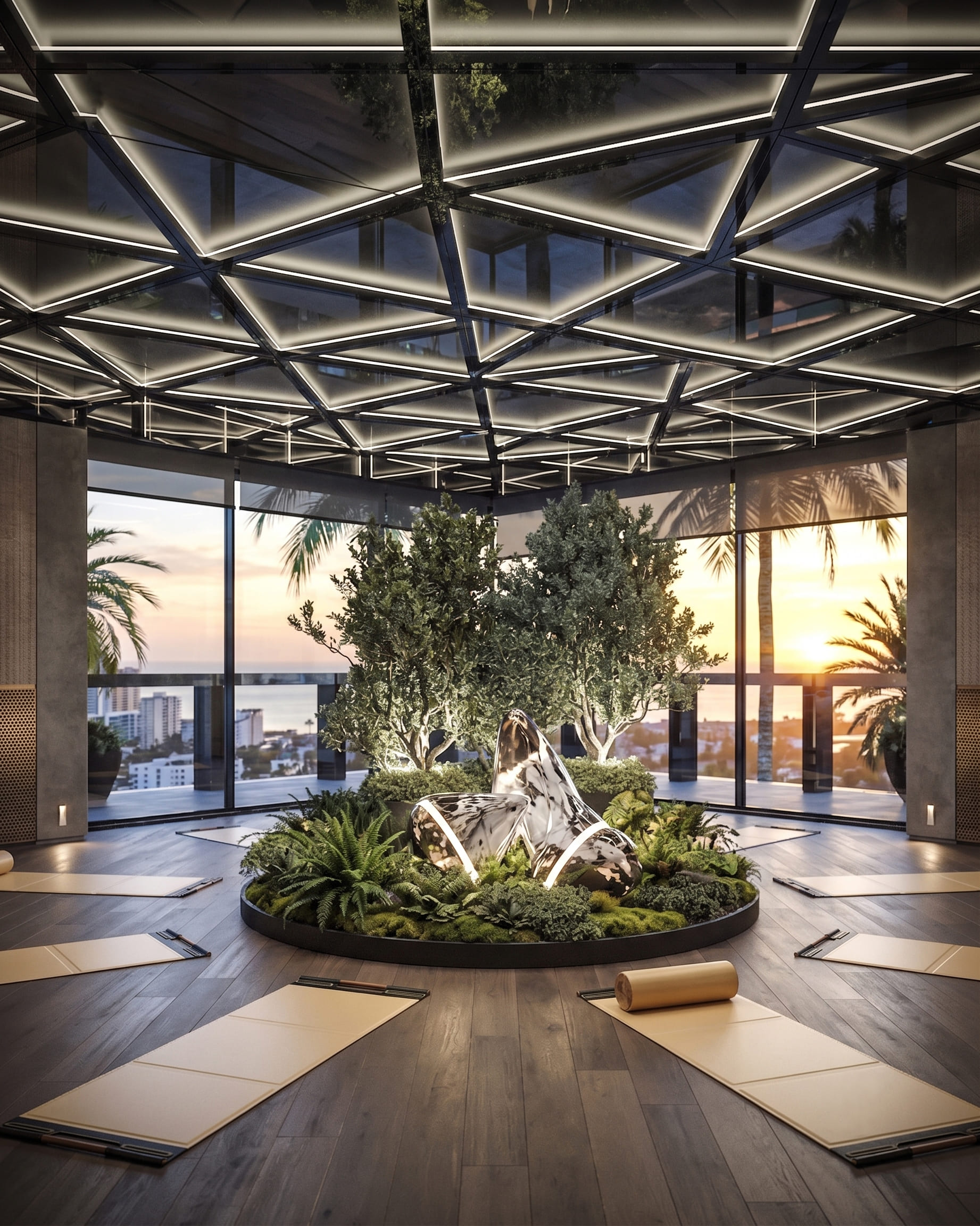
A well-designed luxury home gym is often just one part of thoughtfully designed wellness spaces. Increasingly, homeowners are combining fitness areas with dedicated spaces for recovery, recognising that long-term health depends just as much on restoration as it does on exercise itself.
A sauna, steam room, cold plunge, massage area or quiet stretching space can transform a gym into a complete wellness experience. Beyond physical recovery, these spaces create a natural routine that makes healthy habits easier to maintain over time.
Rather than treating the gym as a separate room, think of it as the starting point of a space designed to support your wellbeing every day.
Designing Superyacht Gyms That People Actually Use
For many yacht owners, maintaining an active lifestyle doesn’t stop when they leave shore. A thoughtfully designed superyacht gym allows daily fitness routines to continue whether the yacht is used for weekend cruising or extended voyages across the Mediterranean or Caribbean.
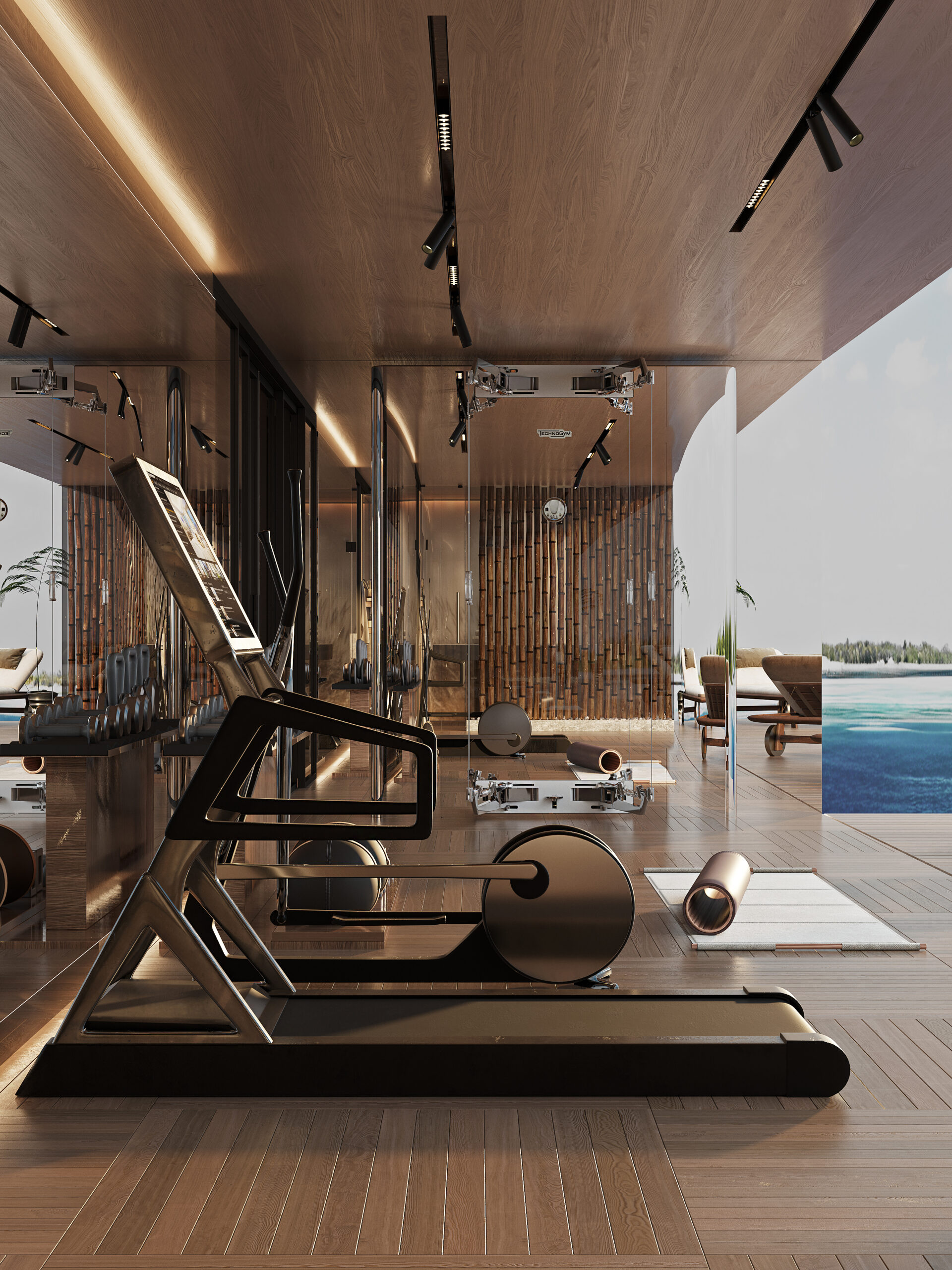
Designing a gym on a yacht requires a very different approach from designing one in a residence. Every decision is influenced by available space, equipment weight, structural loads and the constant movement of the vessel. Machines must be securely fixed, positioned to remain comfortable underway and selected with marine conditions in mind, where humidity and salt air affect long-term durability.
Space planning also becomes significantly more important. Instead of filling the room with as many machines as possible, designers usually prioritise versatile equipment that supports multiple training styles while maintaining generous circulation space. This creates a gym that feels open, comfortable and genuinely enjoyable to use rather than crowded with equipment.
Another important consideration is its relationship with the rest of the yacht. The best superyacht gyms are rarely designed as isolated rooms. Instead, they are carefully integrated into the overall yacht interior design, often positioned close to beach clubs, outdoor decks or other lifestyle-focused areas to create a seamless onboard experience.
Ultimately, the objective is exactly the same as in a private residence: creating a space that encourages consistency. When the environment feels intuitive, comfortable and inspiring, maintaining healthy habits becomes effortless, wherever the yacht happens to be.
OLT DESIGN Insight
Designing a luxury home gym is about far more than selecting premium finishes or the latest fitness equipment. It’s about understanding how architecture influences everyday habits.
Over the years, we’ve learned that people rarely stop exercising because they chose the wrong equipment. More often, they stop because the space never became part of their daily routine.
Natural light, fresh air, thoughtful planning and carefully selected equipment all contribute to creating an environment that feels inviting every single day. When those elements work together, exercise becomes less of an obligation and more of a natural part of life.
Ultimately, the success of a home gym design isn’t measured on the day it’s completed — it’s measured years later, by how often its owners still choose to use it.