Light on water: lighting systems that transform yacht interiors
There’s a moment that happens on every yacht, usually around sunset. The sky shifts through colors you can’t quite name. The water catches that light and throws it back, dancing across surfaces in ways that feel almost alive. And inside, if the lighting is done right, the interior doesn’t compete with this spectacle but responds to it.
This is what separates functional lighting from transformative lighting aboard a yacht. On land, you control light completely. But on water, you’re in conversation with something larger. The quality of light constantly changes, and your interior lighting needs to work with those changes rather than against them.
The yachts that feel most remarkable are those where lighting isn’t just about visibility. It’s about creating spaces that shift throughout the day, that feel intimate when you want intimacy and expansive when you want openness.
Why yacht lighting is fundamentally different
The context constantly changes. The main salon you’re lighting will experience morning sun streaming through windows, dramatic sunset colors, and complete darkness at anchor far from shore. Your lighting system needs to work beautifully in all these scenarios. Space is precious and multi-functional. The same salon might serve as a morning coffee spot, afternoon workspace, cocktail hour gathering place, and late-night reading corner. The lighting needs to support all these uses without compromise.
Natural light behaves differently on water. Reflections from the sea create constantly shifting patterns. Large windows mean sunlight penetrates deeper into spaces. This abundance during the day makes the transition to artificial light more critical. Get it wrong, and evenings feel harsh and unwelcoming. Technical constraints matter even more. Weight considerations influence fixture selection. Vibration requires secure mounting. Salt air affects materials. Power consumption matters, especially when running on generators or at anchor.
The foundation: multi-level lighting architecture
The most successful yacht lighting systems work in layers. Different types of light serve different purposes, all controlled to work together seamlessly.
- Ambient light provides the base illumination. On yachts, this often comes from concealed sources like cove lighting along ceiling perimeters, recessed fixtures that wash walls, and indirect light bouncing off surfaces. Modern LED systems excel here, tucked into architectural details while consuming minimal power. The key is avoiding flat, uniform brightness. Even ambient lighting should have subtle variation, slightly brighter in active areas, softer in transitions.
- Task light serves specific activities like reading, food preparation, navigation, and grooming. In galleys, task lighting over preparation areas needs to be clear and shadowless. In cabins, reading lights should provide adequate brightness without disturbing someone sleeping nearby. The sophistication comes from integration. The best task lighting doesn’t look like an afterthought. It’s embedded in the architecture. For example, a reading light seamlessly incorporated into a headboard. Galley lighting integrated into cabinet undersides, invisible until needed.
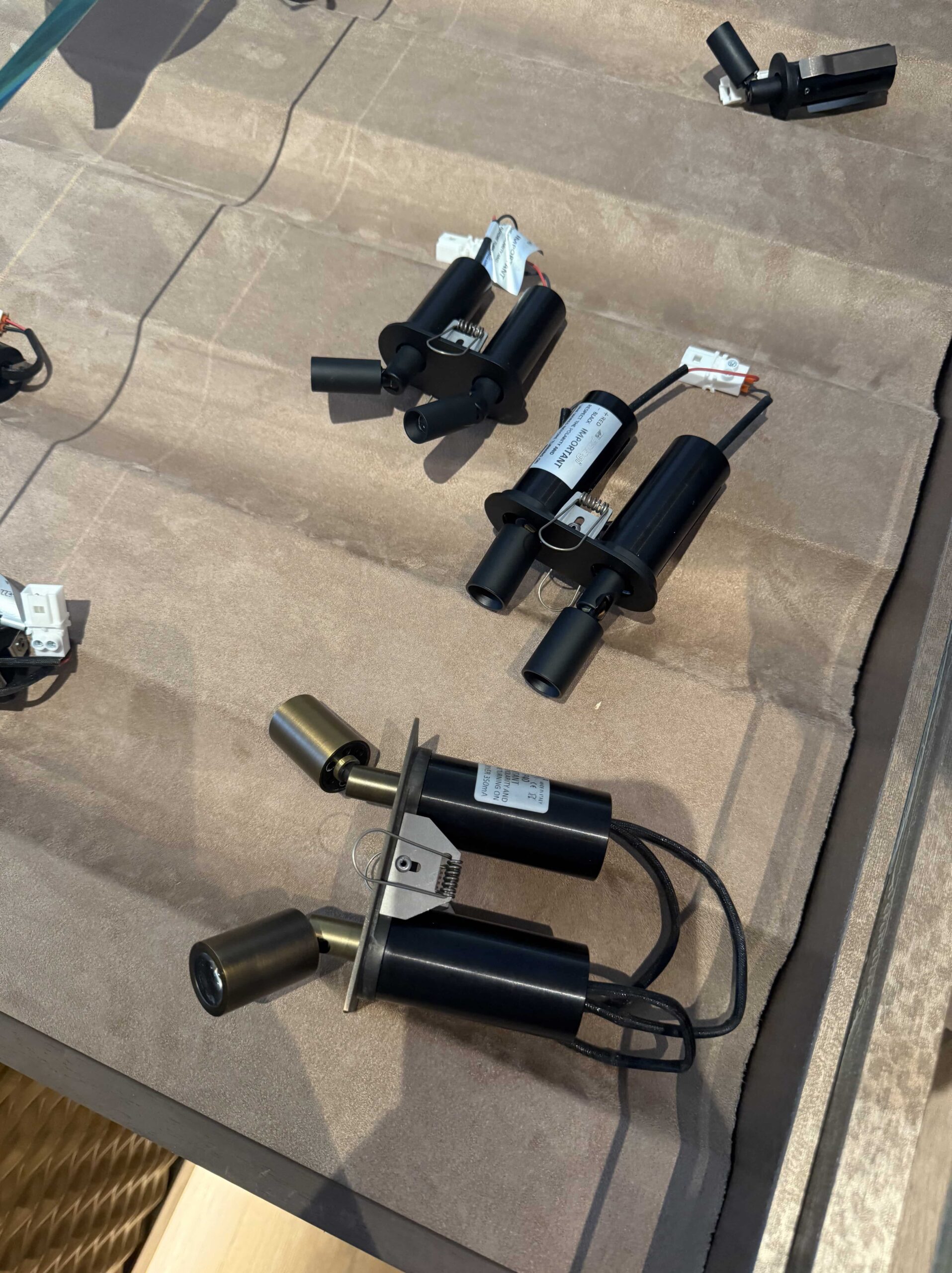
- Accent light draws attention to specific elements like artwork, architectural details, and beautiful materials. LED spotlights allow precise beam control, putting light exactly where you want it without spill. The sophistication is in restraint, cause too much creates visual chaos.
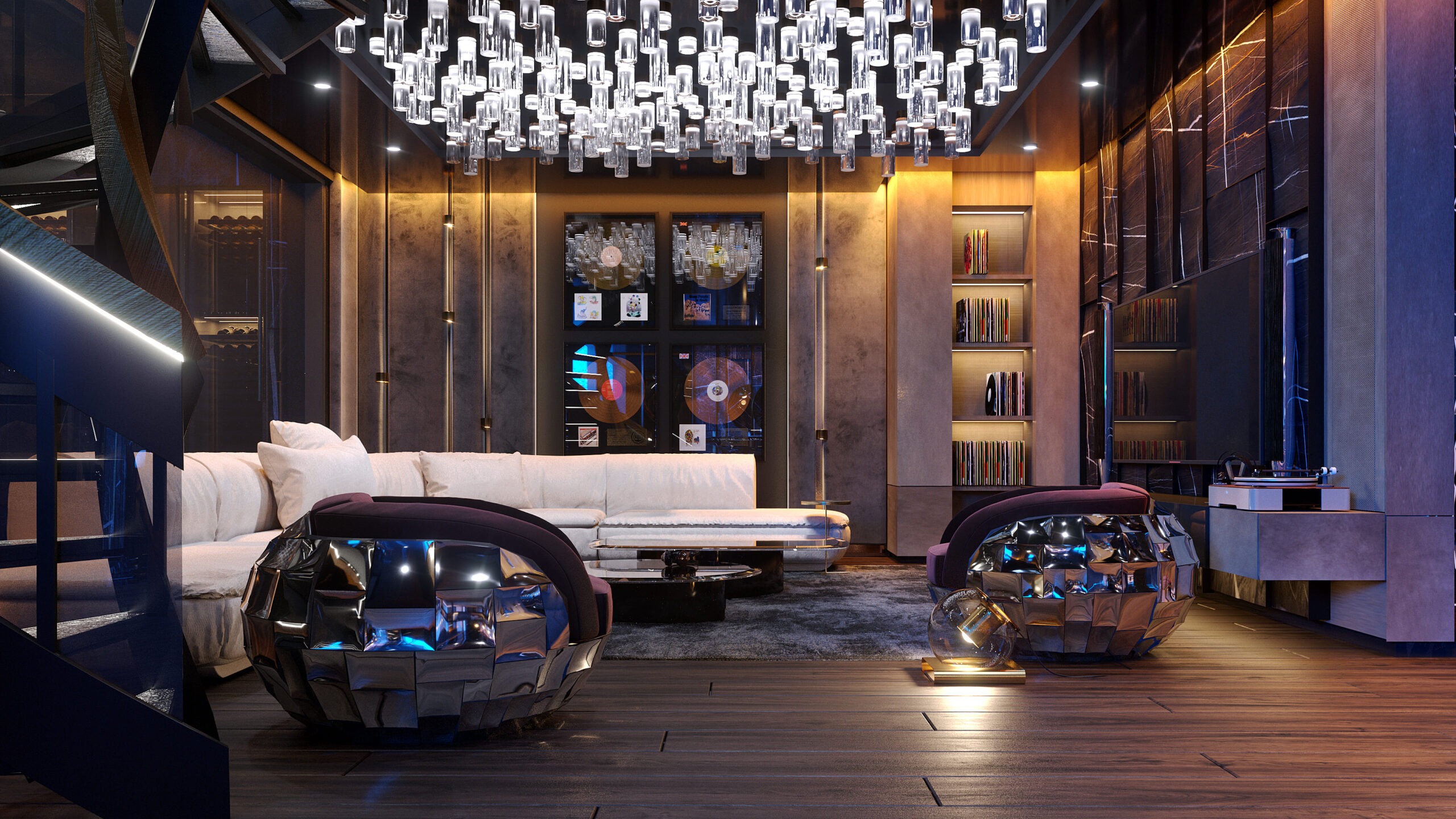
- Feature light is inherently visible in chandeliers, pendants, and decorative fixtures that are beautiful objects in themselves. On yachts, scale matters enormously. Contemporary design increasingly favors custom feature lighting created specifically for the space, contributing both aesthetically and functionally.
Working with natural light
Natural light on a yacht isn’t just abundant. It’s constantly changing and often overwhelming. Managing it well is as important as creating good artificial lighting. Modern yacht design celebrates large windows and open layouts. This creates an extraordinary connection with the surroundings but presents challenges. The solution isn’t blocking natural light but modulating it. Automated shading systems allow fine control to reduce glare while maintaining views or creating complete darkness when needed.
The most sophisticated systems integrate shading control with artificial lighting. As shades close to manage afternoon sun, interior lights gradually increase to maintain comfortable ambient levels. The transition happens smoothly, often without occupants consciously noticing. Water reflects and refracts light in constantly changing patterns. Rather than fighting this, thoughtful design can enhance it. Light-colored ceiling surfaces catch reflections beautifully. Strategic positioning of interior lights can create interesting interactions with water reflections.
The most challenging moment is the transition from daylight to artificial light. Done poorly, it’s jarring. Done well, it happens so gradually you barely notice. Light sensors detect decreasing natural light and gradually bring up artificial lighting over an hour or more, maintaining consistent perceived brightness as the sun sets.

LED technology: capability and possibility
LED technology has transformed what’s possible in yacht lighting. Modern systems allow control that was impossible with traditional lighting — smooth dimming across the full range, color temperature adjustment from warm candlelight tones to cooler daylight white. This tunability enables lighting that adapts to use and time. Morning light in a cabin might be slightly cooler, energizing. Evening light shifts warmer, promoting relaxation. The same fixture provides both.
LEDs’ compact size allows integration into spaces that couldn’t accommodate traditional fixtures. Lighting can be embedded in handrails, recessed into thin ceiling planes, or hidden within joinery. This enables lighting that feels magical, like illumination that appears without an obvious source.
Quality LED fixtures last 50,000 hours or more. It is years of typical yacht use before requiring replacement. This matters enormously aboard, where accessing fixtures can require significant disassembly. Marine-rated LED fixtures account for voltage fluctuations, provide proper heat management, and use materials appropriate for the marine environment.

Creating atmosphere in different zones
Different areas of a yacht serve different purposes and need their own lighting logic. The art is to make these varied zones feel like parts of a single story — coherent, flowing, and emotionally tuned. Good design doesn’t just illuminate; it shapes how people feel and move. A well-planned scheme can turn a corridor into a calm passage, a salon into a lively stage, or a suite into a cocoon of privacy. Balancing all this while keeping visual harmony across the yacht is where lighting design becomes an art form.
Owner’s suite: intimacy and flexibility
The master cabin doubles as a bedroom, lounge, workspace, and private retreat, so the lighting must adapt seamlessly to every mood. It should be bright enough for reading or working, yet soft and cocooning when it’s time to unwind. Layering creates that balance: ambient light from concealed sources sets a calm foundation; adjustable task lamps by the bed add function; and gentle accent lighting highlights textures, art, or architectural details. Control systems play a crucial role — dimming, zoning, and preset scenes like “morning,” “relax,” or “evening” let the owner shift the atmosphere with a single touch. Natural light adds another dimension. Large windows bring in sunlight and views, while high-quality shading ensures full darkness when needed without losing that open, airy feel.

Main salon: social versatility
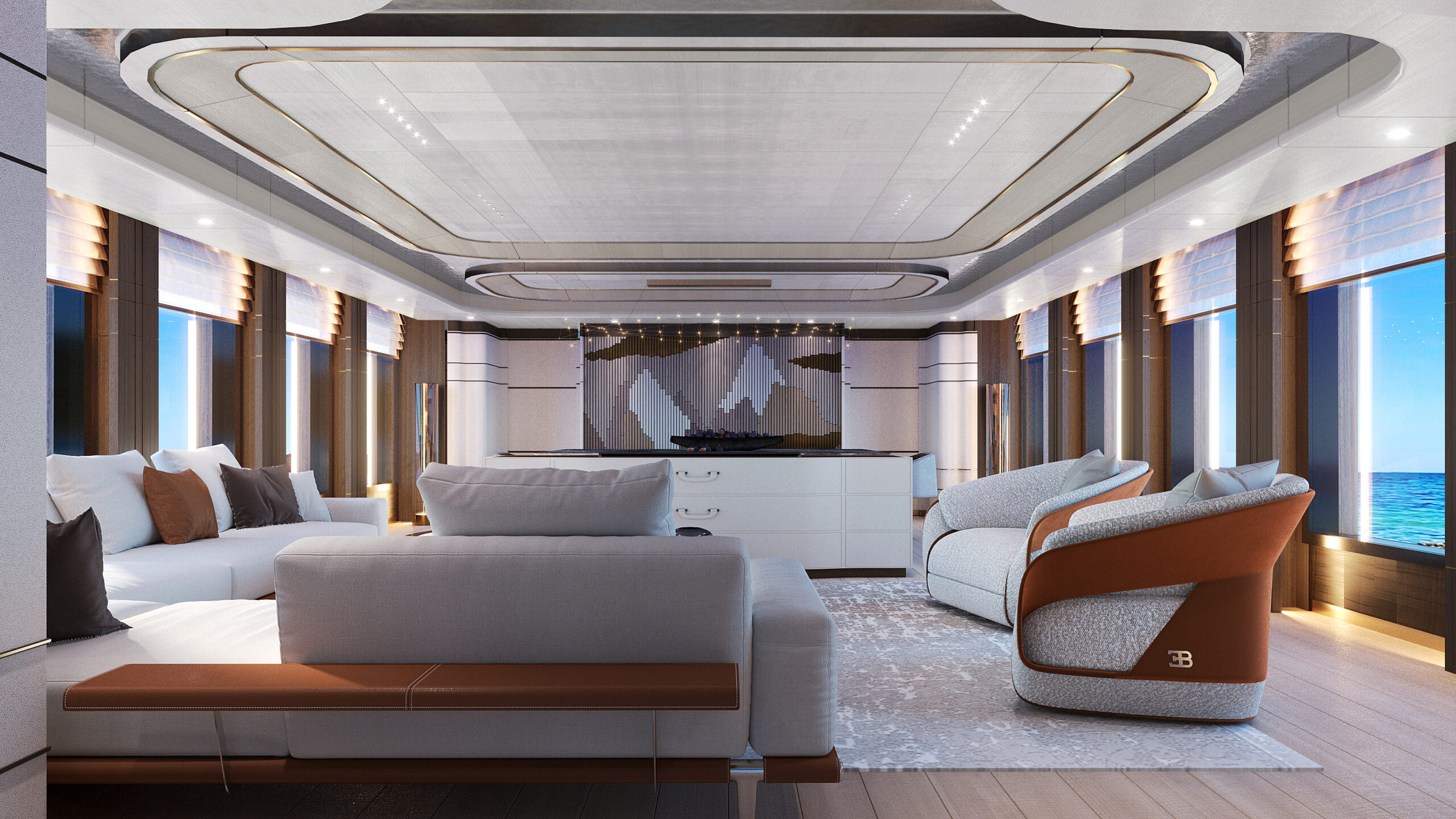
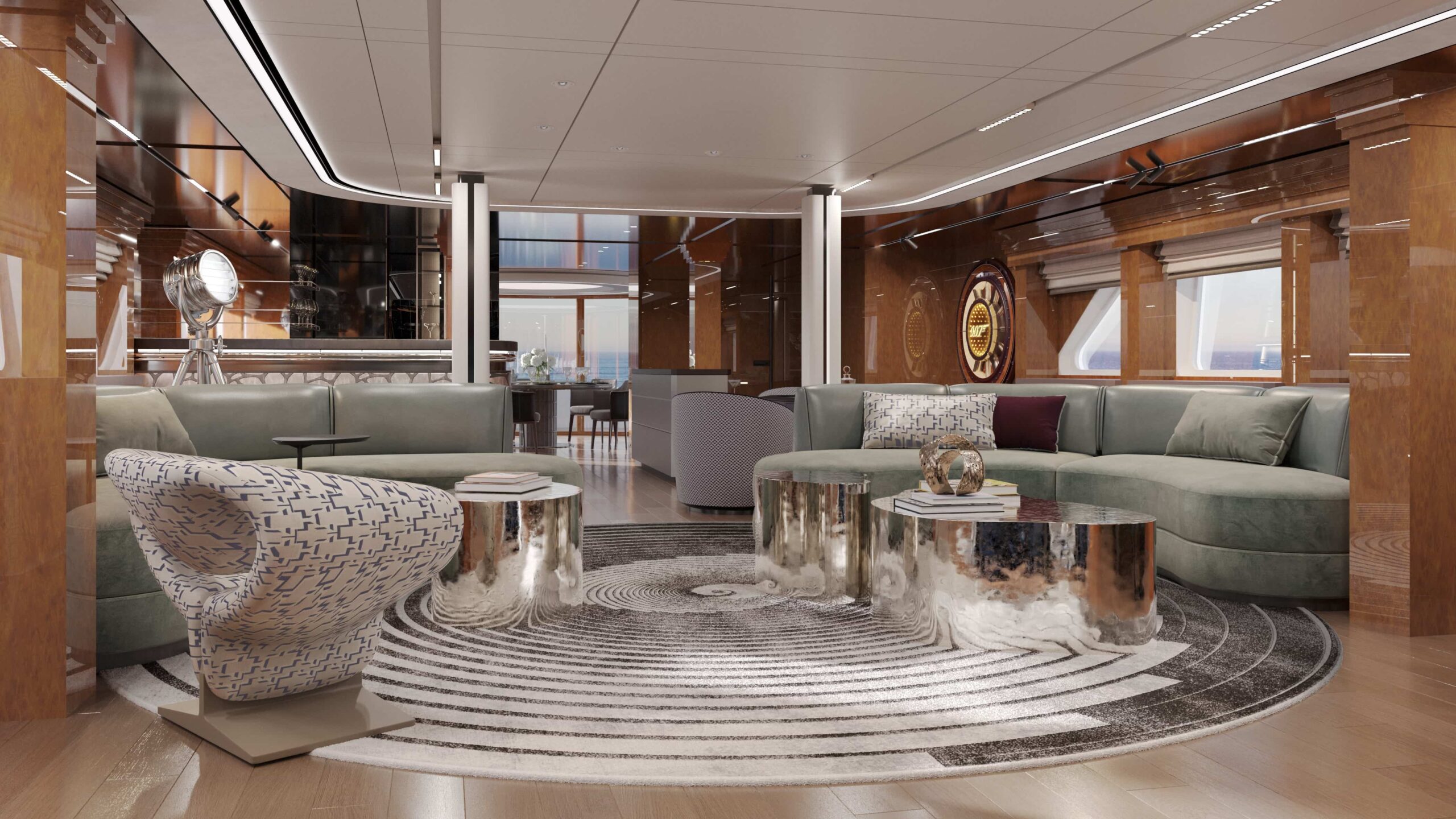
The main salon is the yacht’s social heart. It is a place that hosts everything from casual breakfasts to elegant dinner parties. Its lighting has to handle all of it with style. Zoning creates this versatility: ambient lighting provides the foundation, while focused pools of light define seating areas, the bar, or the dining zone. Each can be adjusted independently to shape the mood, whether it’s intimate and subdued or bright and lively. Statement fixtures like pendants or sculptural sconces can add character and focal points, but they must blend with the overall scheme rather than dominate it. Because the salon often connects visually with exterior decks, interior and exterior lighting need to work together. Carefully placed fixtures prevent reflections on glass at night and maintain a seamless connection to the surrounding sea.
Sky lounge: open-air ambiance
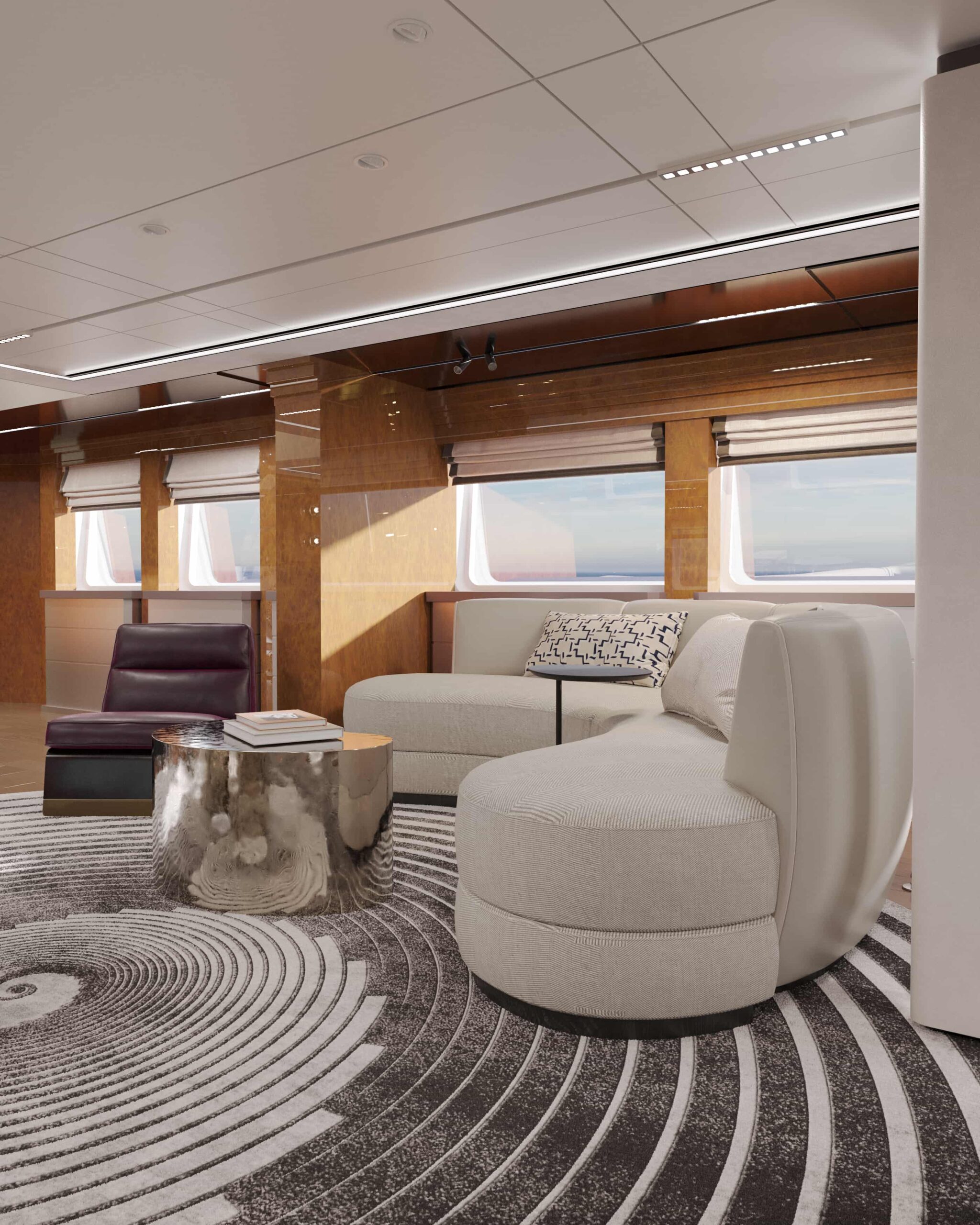
The sky lounge bridges the boundary between interior and exterior, demanding lighting that performs in changing conditions. By day, it must balance sunlight and glare. By evening, it should create a sense of warmth and occasion. Fixtures here often face exposure to salt air and moisture, so materials and finishes need to be marine-grade and weather-resistant.
Layered illumination helps define its dual character — ambient lighting for relaxed afternoons, subtle accents to highlight design elements, and flexible task lighting when the space turns into a dining or entertainment zone. Matching the color temperature and intensity of adjacent deck lights ensures a smooth visual transition, especially when sliding doors are open. With scene controls, the sky lounge can shift instantly from a bright, social gathering spot to a cozy retreat under the stars.
Galley: practical precision
Galleys require the most task-focused lighting on the yacht. Food preparation demands bright, shadowless illumination. But galleys are often visible from dining or social areas, so the lighting needs to look beautiful while being completely functional. The solution is typically layered. Bright task lighting over preparation surfaces can be turned on only when needed for cooking. Ambient lighting provides pleasant general illumination when the galley is visible but not actively in use. Under-cabinet lighting illuminates countertops without making the space feel over-lit.
Control systems: the intelligence behind the light
Great lighting design needs great control. Modern systems integrate all lighting into unified interfaces such as touch panels at key locations, tablet or smartphone apps, allowing control from anywhere aboard. Automation can adjust based on time, ambient light levels, or occupancy.
The key is making sophisticated capability feel simple. A guest should be able to turn lights on and off intuitively. Scene programming transforms how spaces work. Instead of adjusting ten different zones individually, you press “Dinner Party” and the entire main salon configures appropriately.
The Future: Circadian and Human-Centric Lighting
Emerging technology focuses on human physiology. How light affects our energy, sleep, and well-being. Circadian lighting adjusts color temperature and brightness throughout the day to support natural rhythms. Morning light is cooler and brighter, promoting alertness. Evening light shifts warmer and dimmer, supporting sleep readiness. This isn’t just about comfort. Appropriate light exposure improves sleep quality, reduces jet lag effects, and enhances overall well-being. For yachts used as extended residences or for long-range cruising, these benefits can be substantial.

Transformative yacht lighting isn’t about any single fixture or technology. It’s about understanding that light shapes experience. How spaces feel at different times, how they support different activities, how they create moments of beauty that become memories. The most successful systems are those where lighting feels effortless. You don’t think about the technical sophistication. You just notice that the yacht feels right. Intimate when you want intimacy, energizing when you want energy, practical when you need functionality. Whether you’re planning a new yacht or reimagining an existing interior, thoughtful lighting can transform how you experience life aboard.