Asian Zen Interior Design Style
In our fast-paced modern world, Asian Zen interior design creates peaceful sanctuaries within our homes through carefully curated elements that promote tranquility and mindfulness. This distinctive Asian Zen interior design style transcends mere decoration, transforming living spaces into havens of serenity that nurture both body and soul. The essence of Asian interior design lies in its profound simplicity, where every element serves a purpose and nothing exists without clear intention. When you embrace this Style, you’re adopting a lifestyle philosophy that values peace, balance, and mindful living. This approach draws from centuries-old Eastern wisdom, blending traditional Buddhist principles with contemporary needs to create spaces that support well-being and inner harmony.

Origins of Asian Zen Interior Design
The Asian Zen design tradition emerged over 1,500 years ago with Zen Buddhism in China, later flourishing in Japan. This spiritual philosophy emphasized direct experience over complexity, simplicity over ornamentation, and present-moment awareness over endless striving. These principles naturally extended into architectural practices, creating spaces that supported meditation and peaceful daily living.
The Zen style interior we recognize today evolved through centuries of refinement in Buddhist monasteries, tea houses, and traditional homes. Monks discovered that their physical environment profoundly influenced their mental state, leading to Asian interior design principles that eliminated distractions and promoted clarity of thought while creating harmony between inhabitants and their surroundings.
Philosophical and Cultural Foundations
The foundation of Asian style interior design rests on key Buddhist concepts that directly influence design choices. The principle of impermanence encourages using natural materials that age gracefully, while interdependence suggests all elements should work together harmoniously rather than competing for attention.
Mindfulness manifests in Asian Zen design style through the intentional placement of every object and careful consideration of how each element affects occupant well-being. This philosophy rejects accumulation and display, instead embracing selective curation where each item earns its place through beauty, function, or spiritual significance. Furthermore, the Buddhist Middle Way, which is avoiding extremes, translates into balanced interiors that neither overwhelm with complexity nor underwhelm with bareness. This balance creates spaces that feel complete without being cluttered, achieving delicate equilibrium through careful attention to proportion and negative space.
Influence of Traditional Asian Architecture
Traditional Japanese and Chinese architectural principles profoundly shaped modern Asian Zen interior design style, contributing structural elements that remain central today. Japanese residential architecture demonstrated how to create intimate, human-scaled spaces that maintain connection with nature despite urban constraints.
The Japanese concept of ma, negative space or pause, revolutionized how designers think about emptiness. Rather than viewing empty areas as spaces to fill, Asian Zen interior design treats these voids as essential elements that allow the eye and mind to rest, explaining why Zen interiors feel spacious even in compact areas.
Chinese architectural traditions contributed feng shui principles, considering how energy flows through spaces and affects occupant well-being. This influence appears in careful attention to room layouts, furniture positioning, and the relationship between interior and exterior spaces.
Key Features of Asian Zen Interior Design
The distinctive characteristics of asian zen interior design work together to create environments that promote calm, clarity, and contentment. Minimalism forms the cornerstone, involving careful curation that keeps only items serving clear purposes or bringing genuine joy, creating visual calm by reducing competing elements. The emphasis on harmony appears in how different elements relate to each other and the overall space. Colors flow seamlessly, materials complement rather than contrast sharply, and furniture scales appropriately to room dimensions, creating unified environments that feel inherently peaceful.
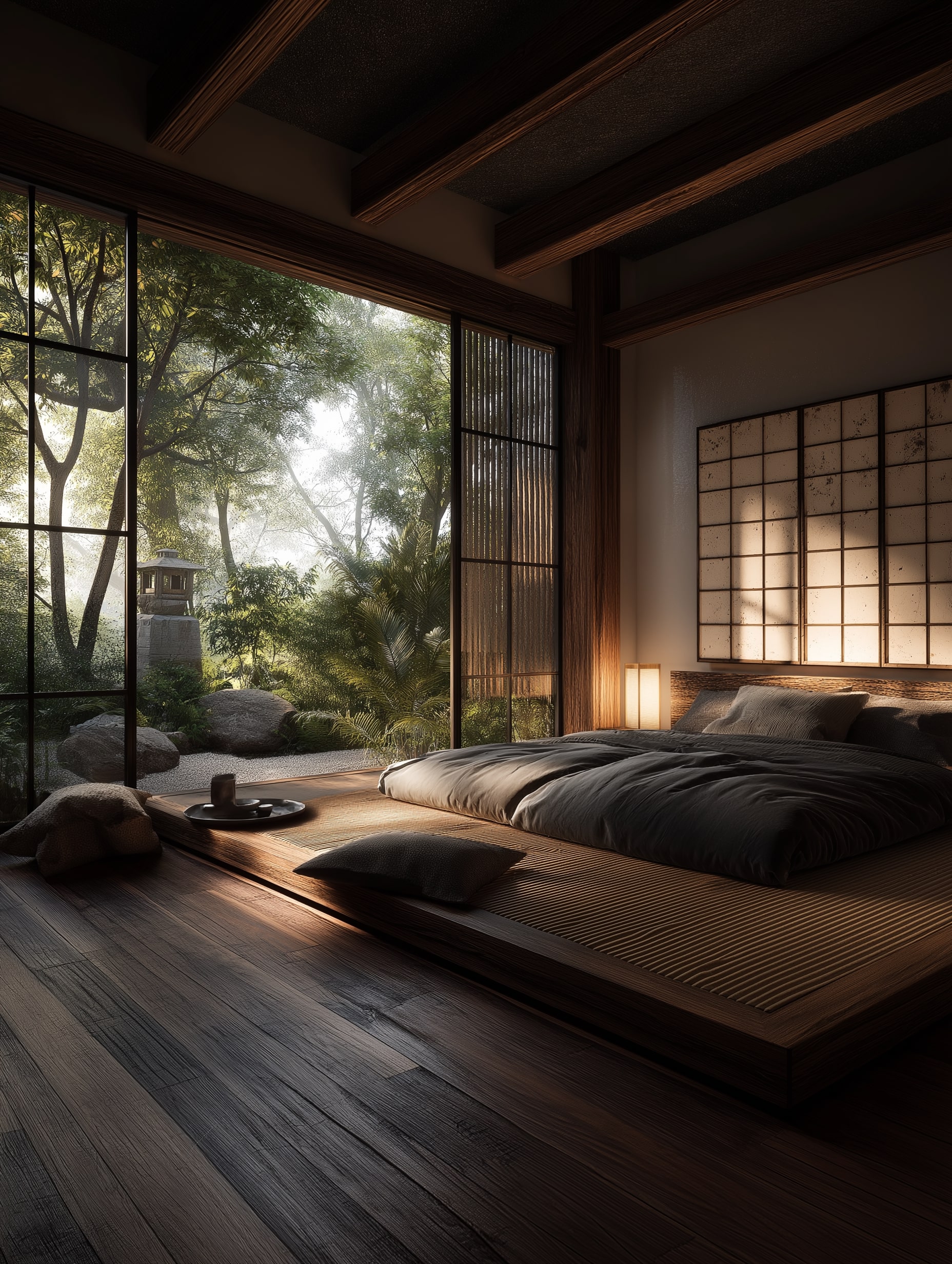
For example, tranquility emerges from avoiding harsh contrasts, jarring elements, or overstimulating features. Zen interiors use subtle texture variations, gentle color transitions, and soft, diffused lighting to create interest without disruption. Connection with nature runs throughout authentic Zen design through extensive use of natural materials, incorporation of plants and natural light, and design elements referencing natural forms. Serenity emerges as the natural result when these principles work together effectively.
Color Palette and Materials
Asian Zen interior design style color palettes prioritize earth tones and natural hues that support relaxation. Warm beiges and soft browns create grounding foundation colors, while gentle grays provide sophisticated neutrals. Sage greens and soft blues introduce color without overwhelming, often inspired by moss, stone, or sky. White plays a crucial role but tends toward warm, creamy tones that feel inviting rather than clinical. These whites provide breathing room and help create the spaciousness characterizing Zen interior designs.
In terms of materials, Asian Zen design style often prioritizes natural elements such as:
- Wood — takes a prominent role in furniture, flooring, and architectural elements, from warm honey oak tones to cool weathered cedar. The grain patterns provide visual interest without requiring additional decoration.
- Bamboo — appears frequently, valued for its sustainability and distinctive appearance, bringing lightness and organic quality that perfectly embodies Zen principles.
- Stone materials — introduce weight and permanence that balance lighter wooden elements. Natural stone colors coordinate effortlessly with zen palettes while providing textural contrast.
- Traditional tatami mats — continue to influence contemporary design through the concept of modular, natural floor coverings.
- Natural fibers — linen, cotton, and wool appear in textiles throughout Zen interiors, aging gracefully and feeling pleasant to touch while complementing the overall aesthetic.
Furniture and Decorative Elements
Asian Zen design furniture emphasizes clean lines, appropriate scale, and multiple functionality rather than ornate decoration. Pieces tend to sit low to the ground, creating intimate spaces that encourage relaxation while making rooms appear larger and more spacious. Traditional Japanese influences appear in multi-purpose furniture such as ottomans providing seating and storage, adjustable tables, and modular seating. This flexibility supports adaptability while reducing the need for multiple single-purpose pieces.
Asian interior design storage solutions are typically hidden or seamlessly integrated into furniture design. Built-in cabinetry and concealed compartments maintain visual simplicity essential to the style while providing ample storage without cluttering sightlines. Decorative elements are chosen with extraordinary care, as each piece must justify its presence. A single ceramic art piece might serve as an entire room’s focal point, while a carefully tended bonsai tree brings life and natural beauty without overwhelming the space.
How to Implement Asian Zen Interior Design in Your Home
Creating an authentic Zen-style interior environment requires more than simply purchasing Asian-inspired furniture or adding a few Buddhist statues to existing décor. Successful implementation involves understanding the underlying principles and applying them thoughtfully to your specific space and lifestyle needs. The transformation process often happens gradually, allowing you to experience how changes affect your daily life and emotional well-being.
Begin by decluttering ruthlessly, keeping only items that serve clear purposes or bring genuine joy. This process often proves more challenging than expected, as it requires honest evaluation of possessions and their role in your life. The Zen principle of non-attachment can guide this process, letting go of items that represent past identity or future aspirations that don’t align with present reality.
Consider your space’s natural light patterns and how they change throughout the day and seasons. Asian Zen interior design works with natural light rather than fighting it, using window treatments that filter harsh sunlight while maximizing gentle illumination. This might involve replacing heavy curtains with bamboo blinds or installing sheer panels that provide privacy without blocking light.

Creating Balance and Simplicity
Achieving visual balance in Asian Zen interior requires understanding how different elements work together. Distribute visual weight evenly throughout rooms to avoid areas feeling heavy or unbalanced. Asymmetrical balance often works better than symmetrical arrangements, creating dynamic compositions while maintaining stability.
Simplicity doesn’t mean eliminating all decoration, but being highly selective about inclusions in the Asian Zen design style. Create clear sightlines by avoiding furniture arrangements that create visual barriers, supporting zen flow principles while making spaces feel larger. Negative space deserves as much attention as filled areas. Empty spaces around objects allow the eye and mind to rest while highlighting the individual piece’s beauty. Resist filling every surface; these empty spaces are working design elements.
Integrating Nature and Mindfulness
Bringing natural elements into Zen interior design goes beyond adding houseplants. Consider incorporating natural materials, colors, textures, and even sounds to create stronger connections with the natural world. This might involve reclaimed wood furniture, small water features, or positioning seating for garden views. Natural lighting becomes crucial, changing throughout the day and creating different moods. Work with these changing patterns rather than maintaining consistent artificial illumination, creating dynamic environments without constant rearrangement.
Seasonal adaptability allows interiors to change naturally with the passing year, honoring Buddhist impermanence teachings while keeping spaces fresh. This might involve switching textile weights, changing plant displays, or adjusting decorative elements. In Asian style interior design, mindfulness practices can be supported through thoughtful design choices encouraging present-moment awareness, including dedicated meditation areas, contemplative art, or furniture arrangements supporting mindful activities.
The Asian Zen interior design style offers more than aesthetic appeal; it provides a pathway to creating living spaces that actively support well-being, mindfulness, and inner peace. By understanding and implementing the principles of minimalism, natural materials, harmonious colors, and thoughtful space planning, you can transform your home into a sanctuary that nurtures both body and spirit. Success with Asian interior design comes not from perfectly copying traditional styles but from understanding underlying principles and adapting them thoughtfully to contemporary life. The goal is creating spaces that feel authentically zen while serving your practical needs and personal preferences effectively.
Remember that developing a true Zen–style interior is a gradual process that deepens over time. Each thoughtful choice, each eliminated distraction, and each mindful arrangement contributes to an environment that becomes increasingly supportive of the peace and clarity we all seek in our daily lives. The wisdom of Eastern philosophy, expressed through carefully crafted interior spaces, offers a timeless approach to creating homes that truly nurture the human spirit.