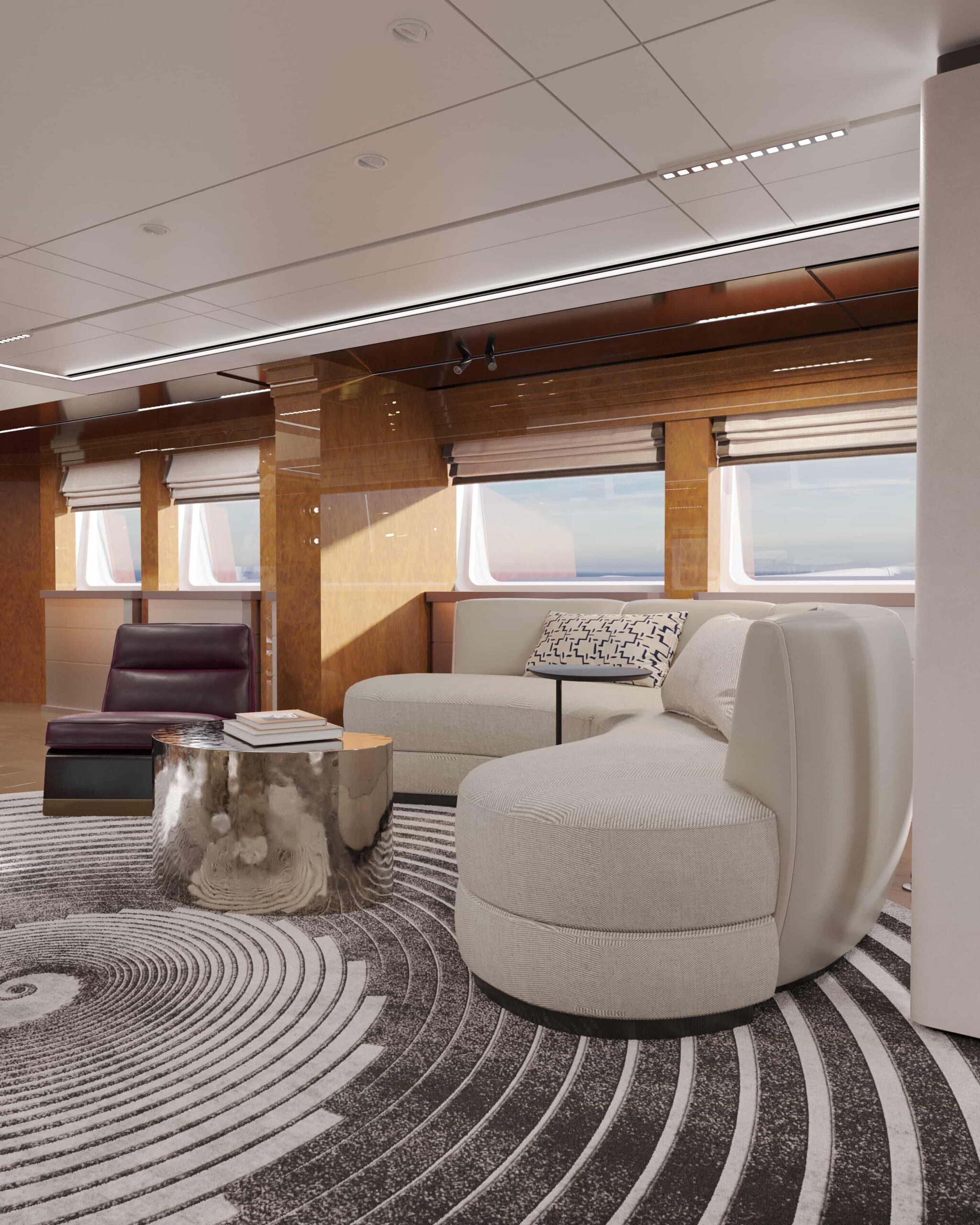
In most homes, art arrives last. The environment is already finished: materials are chosen, furniture is placed, and only then is a painting sought for an empty wall. However, for a true art collector, the process works in reverse. A painting might dictate the proportions of a wall, a sculpture can define the geometry of a hallway, and a large-scale installation often determines the ceiling height and circulation paths.
Therefore, architecture around a collection is not merely about a house filled with many art objects. It is a highly specialized approach to residential interior design where the art collection serves as a baseline parameter, equal in importance to the landscape, natural light, and the owner’s lifestyle. The core paradox here is that the stronger the artwork, the less the architecture should attempt to draw attention to itself.

Art as a Visual Focal Point
In the luxury interior segment, clients frequently express a desire for surroundings filled with things worth looking at. This highlights the exact difference between decorating and collecting. A decorative item solves a compositional problem — it fills a void or supports the color palette. Conversely, an art object must hold your attention. It invites you to step closer, step back, and discover new details over time.
This is exactly how we view a painting in a gallery, and it is why benches are placed in front of masterpieces. True art requires time. Therefore, exceptional interior design does not necessarily bombard a person with numerous expensive details. Instead, it provides an object compelling enough to make you stop.

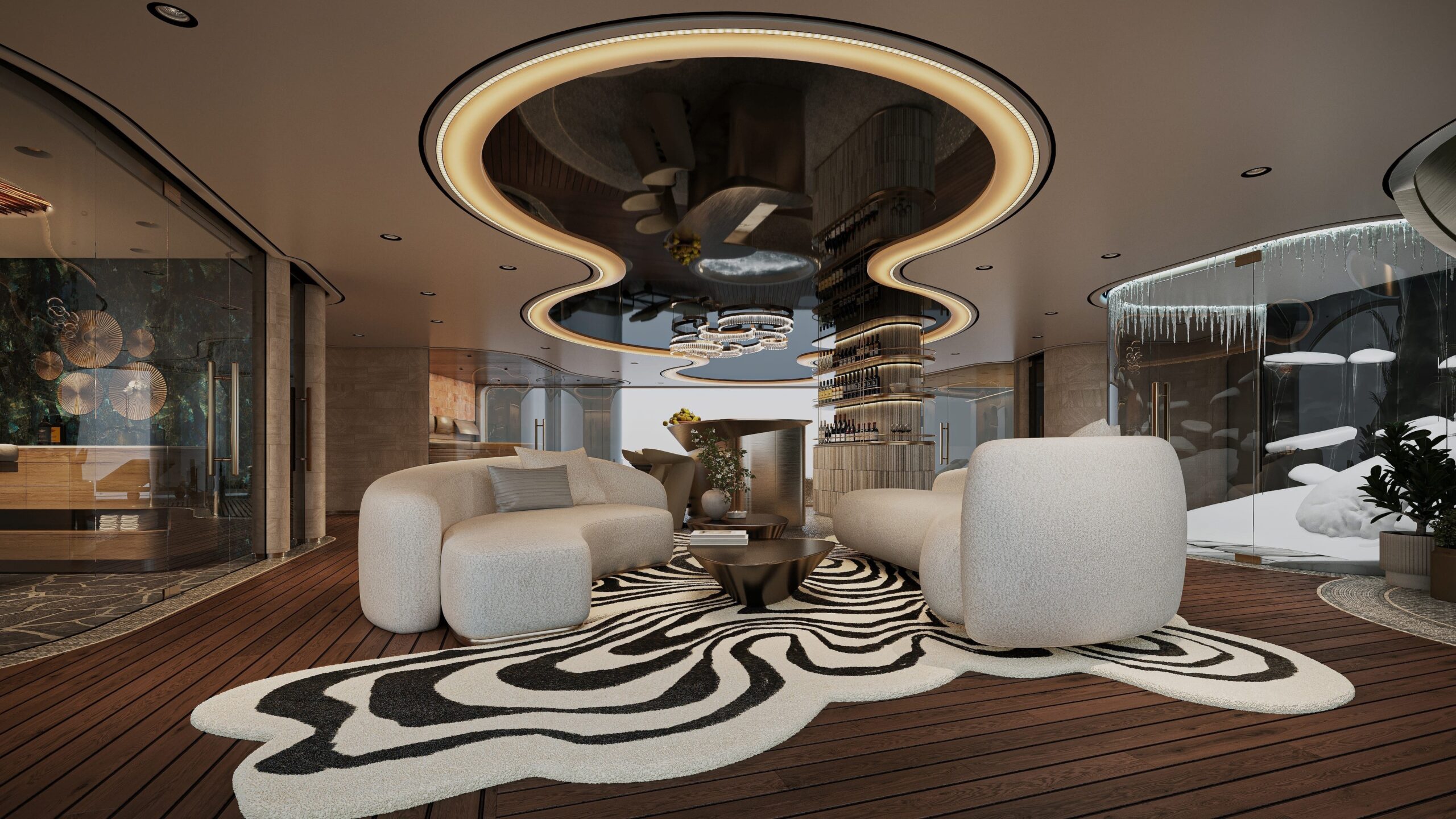
An Interior Design Can Start With a Rug
Once, while working on a Mediterranean-style duplex apartment in Spain, our team was looking for a starting point for the interior concept. We visited a small, specialized rug store and met its owner. He worked with collectible rugs ordered by high-profile clients and said a phrase that stayed with us: if a rug is truly exceptional, the premium interior design must begin with it.
What made this interesting was that we readily accept the same logic when it comes to a painting or a sculpture. But a rug?
Actually — yes.
An art object is not defined by whether it hangs on a wall, stands on a pedestal, or lies on the floor.
A unique tapestry, collectible furniture, or artist-made ceramics can possess such a strong artistic identity that they become the foundation of the entire room. A well-thought-out interior for a collector is not about filling a house with premium items, but deciding which of them deserves to take the lead.
Visual Hierarchy and the Art of Restraint
There is a common architectural trap that is easy to fall into when working with collections. Expressive marble, a complex ceiling, or bespoke lighting might be flawless on their own, but when too many such elements are concentrated in one space, they begin to compete with the artworks. When every interior detail fights for the status of a focal point, a painting or a sculpture simply dissolves among the active textures. Instead of emphasizing the value of the collection, such oversaturation only creates visual fatigue.
For our team, premium interior design is primarily about visual hierarchy. We must clearly understand where the architecture speaks loudly and where it deliberately goes silent, allowing the art to take over. This balance is what makes art integration into an interior feel natural rather than imposed.

Managing Attention: Angles, Shadows, and Spatial Balance
It is not enough to leave a wide wall for a painting or mark coordinates on a floor plan. We must design the conditions of perception. We calculate the exact angle from which an artwork is first noticed, how its silhouette shifts as a person walks by, and how shadows behave from morning to night. Crucially, we also decide what we deliberately will not place nearby.
An interior built for an art collection does not have to be a white, minimalist cube. The setting can remain warm and textured, utilizing natural stone, wood, and metal. The issue is not a lack of minimalism, but a lack of competition. An aggressive marble pattern might destroy the subtle graphics of a painting, while cluttered decor can rob a sculpture of its scale. A good background is not necessarily neutral in color, but it must be neutral in its behavior.
How Art Defines Architecture and Logistics
When a private collection is defined during theinitial strategic design phase, its influence becomes structural. Large-scale artworks dictate the elevation of a room. Sculptures demand specific staircase widths. Entire wings are shaped into gallery corridors. Even more practically, heavy installations require structural reinforcements and advance logistics. Architecture around a collection starts with a very basic engineering question: how will this piece physically enter the building?
Furthermore, the most powerful artworks do not need to be revealed immediately. Directing the gaze is a key part of the experience. Displaying art in an interior becomes much more engaging when circulation acts as a curated exhibition. Entrance halls, corridors, and staircases are perfect for this, as they lack the functional visual noise of kitchens or living rooms, leaving the viewer completely alone with the masterpiece.

Lighting as an Interpretation Tool
Proper art lighting is much more than aiming a spotlight at a canvas. Lighting dictates how a piece is read: it creates volume for a sculpture and reveals the deep textures of an oil painting. At the same time, we must prioritize art preservation. Light damage is cumulative and irreversible, meaning UV control and strict exposure times are mandatory for sensitive works like photography or textiles, closely following guidelines established by institutions like the Smithsonian Museum Conservation Institute
We balance these museum level conservation standards with architectural drama. Daylighting through panoramic windows brings a residence to life, but orientation and shading must be meticulously planned. Not every large wall is a good art wall, and not every beautiful sunlit spot is safe for a private collection.
Different Mediums Demand Different Architectural Solutions
A private collection is rarely uniform. Paintings and photography require precise viewing distances and reflection control. Sculptures exist in three dimensions and demand a carefully planned floor material and ceiling height. Collectible design pieces set the color palette for the entire setting. Meanwhile, large-scale installations directly impact the building’s engineering, requiring integrated electrical and AV systems.
Adaptability and Invisible Technology
A serious art collection is never static. Owners acquire new pieces, lend works to exhibitions, and rotate their display. Therefore, the architecture must accommodate this evolution. Flexible hanging systems, strategic art lighting, and professional in-house art storage allow the exhibition to change without requiring renovations.
Equally vital is the invisible engineering. Strict climate control for art, humidity regulation, air filtration, and advanced security are critical to meeting professional conservation standards. These technologies must operate flawlessly in the background, protecting the investment without ever competing with the aesthetics of the premium interior.

The Privilege of Living Alongside Art
While protecting the works is vital, replicating a sterile museum environment ruins the living experience. A collector’s residence remains, first and foremost, a home. It needs comfortable furniture, personal belongings, and warmth. The greatest privilege of owning a private collection is living alongside it — not visiting it during a scheduled gallery tour, but seeing how a favorite piece looks on a rainy Tuesday morning, or noticing a previously unseen brushstroke while walking past it for the hundredth time.
Key Principles for Integrating Art:
- Meaningful Accents: We prefer fewer, stronger art objects that truly define the character of the residence.
- Art as the Starting Point: Successful art integration means a piece can dictate the material palette and layout long before furniture is selected.
- Hierarchy and Restraint: Secondary design decisions always submit to the primary focal points.
- Choreographed Discovery: The distance and angle from which an object is revealed are just as important as the location itself.
- Technical Lighting: We merge emotional architectural lighting with strict art preservation requirements.
- Invisible Engineering: Climate control for art and security systems are completely hidden.
- Future-Proofing: The architecture is designed to handle future acquisitions effortlessly.
Ultimately, designing for art collectors is an exercise in editing. It is not about showcasing every expensive finish available. It is about creating an environment containing items with enough gravity to make a person stop, wrapped in enough architectural silence to let them truly see it.